

Building on the success of the original NC4+ Blue, the latest evolution of the non-contact tool setter features an ultra-compact design and is now available in four sizes, with operating gaps ranging from 55 to 240 mm. Measurement repeatability has also been improved across the range, now down to +/- 0.5 micron on smaller separations. […]
renishaw
Renishaw launches the FORTiS range of next-generation enclosed linear absolute encoders
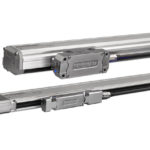
Renishaw, the global metrology specialist, launches the innovative FORTiS enclosed linear absolute encoder series, for use in harsh environments such as machine tools. The FORTiS design is built upon industry-proven RESOLUTE encoder technology and provides high resistance to the ingress of liquids and solid debris contaminants. It features an extruded enclosure with longitudinally attached interlocking […]
Gaining a measurement edge with linear encoders
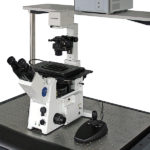
Edited by Miles Budimir || Encoders help linear motion stages reach higher levels of accuracy and performance. Application demands of modern motion systems are pushing the envelope for greater accuracy and finer resolution. Case in point; laboratory equipment with demands for high accuracy positioning of test samples, such as in microscopes. When it comes to […]
Instron Equips Linear-Torsion Tester with Renishaw Encoders
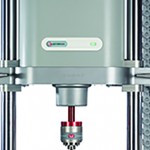
Instron, headquartered in Massachusetts, USA, is a global market leader in the materials testing industry. It manufactures and services a comprehensive range of materials testing equipment and accessories for the research, industrial and academic sectors. A variety of Instron systems test samples ranging from components for jet engines to medical syringes. Instron has just launched […]
RLS heavy duty linear encoder offers 5µm accuracy

RLS (www.rls.si), a Slovenian motion sensing associate of Renishaw, has introduced the LinAce, a tough linear encoder that delivers ±5µm accuracy and full closed-loop control. Designed to be integrated into pneumatic, hydraulic or electromechanical actuators, the encoder comprises a sliding read-head module and a solid steel shaft with an integrated cylindrical scale. It is highly […]
Renishaw Helps Achieve High Accuracy Grinding for Giant Wind Turbine Bearings
KMT Lidköping (www.kmtgroup.com/lidkoping/) has unveiled its new hard-turning VTG4000 (Vertical Turning Grinding) machine that uses a combination of Renishaw SiGNUM optical angle and linear encoders to achieve the required accuracy, and Renishaw magnetic encoders placed on the exposed axes of the cutting heads. “Our largest machine used to accommodate parts up to 600 mm diameter, […]
FASTRACK Linear Encoder System from Renishaw
Renishaw’s new FASTRACK linear encoder scale system brings high accuracy, stainless steel construction and quick, easy installation to large, sectional machines used in flat-panel display and photovoltaic manufacturing applications, as well as large CMMs that require removal of the scale for transit. Also ideal for linear motors with aluminum substrates, and applications where thermal expansion […]