
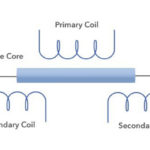
Both LVDTs (linear variable differential transformers) and resolvers are measuring devices that convert displacement into an electrical signal. As its name implies, an LVDT is used for linear measurement, while a resolver is used to measure rotary, or angular, displacement. In terms of construction and operation, the most significant similarity between an LVDT and a […]
Ultrasonic sensors for linear position and distance measuring
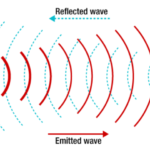
In nature, some animals — such as bats and dolphins — analyze the echo of a sound or call (a process known as echolocation) to navigate or to find prey. In industrial applications, ultrasonic sensors use the analysis of echos from ultrasonic waves to determine the presence, position, or distance of an object. Ultrasonic waves are […]
Three easy ways to specify application requirements for linear motion systems
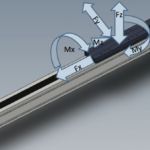
The first step in any automation project is to clearly define the objective — what process are you trying to accomplish or what output are you trying to produce? Once the process or output is defined, it’s time to dig into the details of the application so you can choose the right components or systems […]
What are capacitive sensors and where are they used?
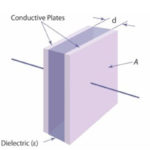
Linear position feedback devices — also referred to as linear encoders — typically measure travel distances ranging from a few dozen millimeters to several meters. But when a positioning system has a very short travel — a few millimeters or less — traditional linear encoders are often too bulky or don’t provide the required measuring resolution. […]
What factors contribute to air bearing stiffness?
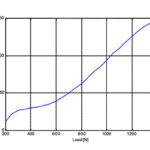
According to the American Society of Mechanical Engineers (ASME), stiffness is: The capacity of a mechanical system to sustain external loads without excessive changes of its geometry (deformations). When we think of stiffness in traditional bearings with rolling elements, we’re typically considering the deflection of the carriage when a load is applied. For air bearings, […]
When should you use a bronze lead screw nut?
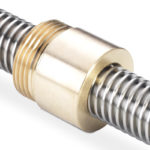
Lead screw manufacturers offer nuts in a wide array of materials, including various plastics and grades of bronze. And while plastics garner a lot of attention for their versatility and range of suitable applications, lead screw nuts made of bronze are especially well-suited for applications with high loads or extremely high (or low) temperatures. Plastic […]
What are low outgassing materials for linear motion components in vacuum applications
Outgassing — the release of gas or vapor from a material through desorption, sublimation (the transition of a material from solid directly to gas), or evaporation — is a critical parameter for materials used in vacuum environments. These gasses and vapors can affect the pressure (or level of vacuum) in the vacuum chamber, and outgassed compounds […]
How to make linear motion systems cleanroom compatible

While we often talk about the importance of keeping contamination out of linear motion components such as linear guides and screws, when these systems are used in a cleanroom, the goal is just the opposite — to keep these components from introducing contamination into the environment. What exactly is a cleanroom? According to ISO 14644-1:2015, […]
How do miniature profiled rail guides compare to their full-size counterparts?
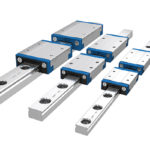
The basic distinction between “standard” and “miniature” profiled rail guides is the width of the guide rail: profiled rails with a width of 15 mm or less — and the carriages that fit on them — are generally considered “miniature” by bearing manufacturers. (However, some manufacturers also produce 15 mm rail guides in standard versions, as we’ll […]
When is encoder resolution specified in bits, and what does that tell us?
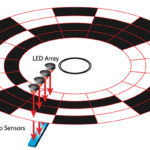
Absolute encoders — whether rotary or linear — track the position of an axis by assigning a unique value to each position on the encoder, so that no matter where the axis being measured is located, its exact position can be determined. And because each position is uniquely identified, this holds true even if the […]