In a recent three-part series, we outlined how screw-based and other types of electric actuation increasingly finds use in today’s presses and other machine tools.
Part 1 of 3: Heavy-duty electric actuation — in presses
Part 2 of 3: Heavy-duty electric actuation — to replace hydraulics
Part 3 of 3: Heavy-duty electric actuation — on large-scale gantries
Off-highway equipment is also making copious use of screw-based electric actuation. In fact, electric actuators have sometimes replaced fluid power-based actuators on off-highway or other equipment where the axes are linear. This is because electromechanical systems consume energy only when moving an axis, resulting in an average efficiency of 82% in converting input power into output work. In contrast, hydraulics typically have an end-to-end efficiency of only 45% or so. Plus, utility electricity is generally cheaper than fossil fuels.
Related: Linear actuators power mobile machinery
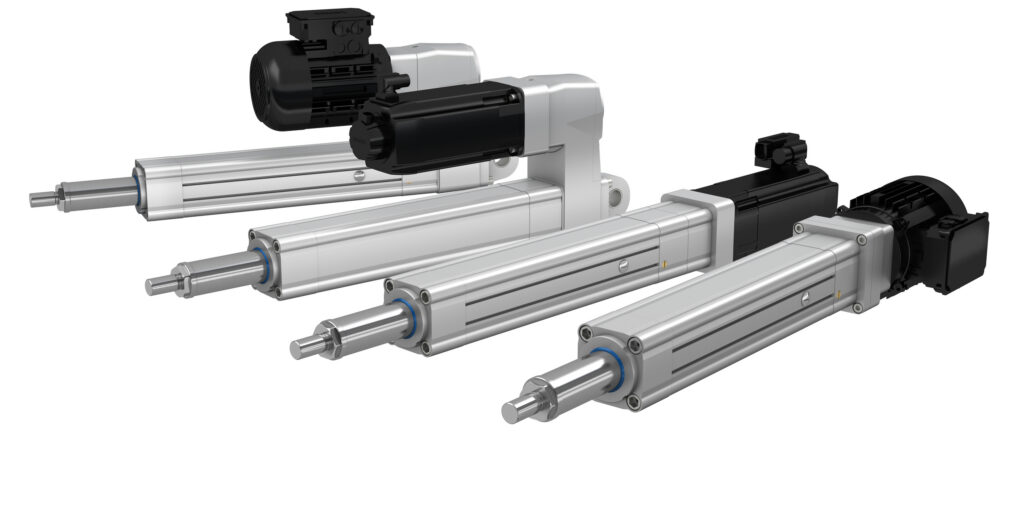
As evidenced by exhibits at this year’s ConExpo, there’s an increasingly wide array of stock ballscrew and roller-screw electromechanical actuators for heavy lifting applications. Certain actuators capable of multiple tons of force are targeted to heavy lifting applications. Developed for construction, agricultural machinery, and automation applications, those with a modular design let design engineers select base components — screw drive, gearbox, motor, and mounting — to accommodate preferred motor types or connect to existing controls for reduced design and programming costs.
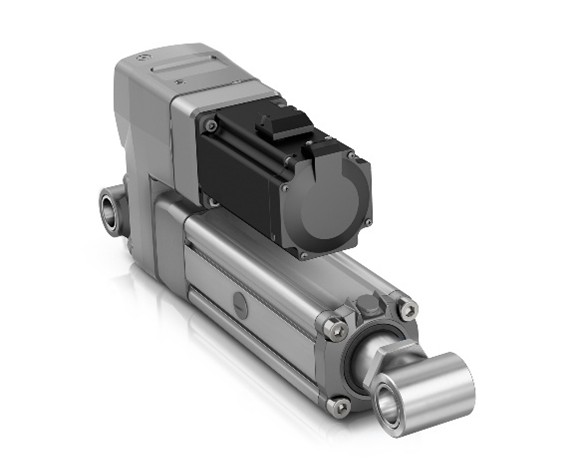
Some ballscrew-based electric actuators enable energy recovery during braking or lowering. Complementing this capability are ballscrews (along with spur gears and seals) that are friction-optimized. Such components can yield top efficiency — especially when they’re paired with a synchronous servomotor of efficiency class IE4 or higher.
Related: Update on electrification
With some actuator series, design engineers can specify a speed limit with a centrifugal brake so there’s safe load lowering without power.
Multiple mounting options simplify integration into different applications. For example, some push tubes are available with a T-Bar, threaded male-connection pin, internal threads, or a screwed-on rod end. Motor-side mounting options can include trunnion mounts on the bearing housing or two rear attachments on the gearbox.
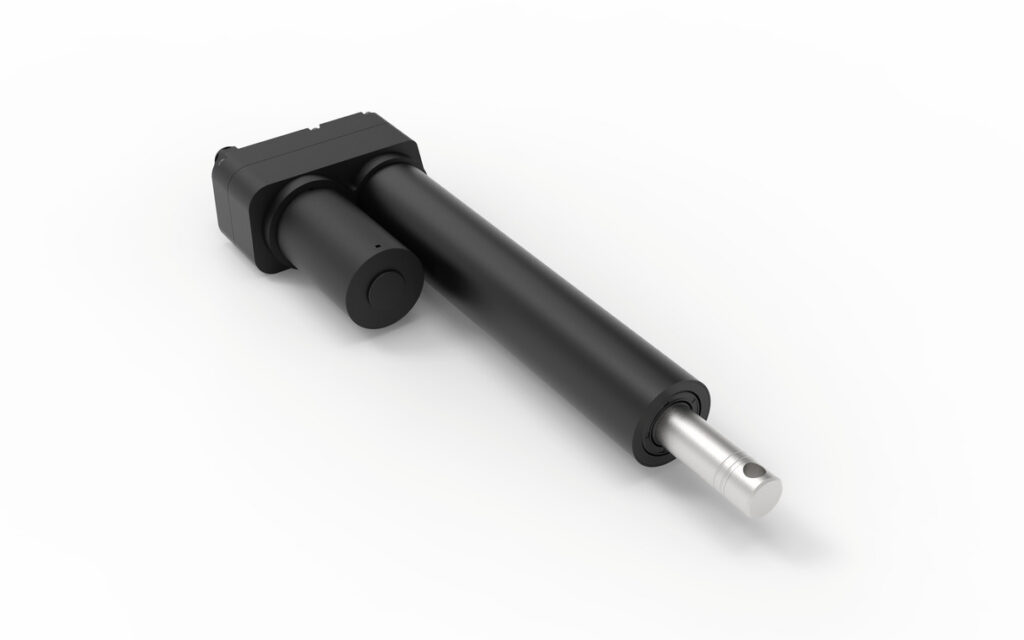
Very large ballscrew actuators capable of many tons of output force often feature vents to maintain IP66 while in motion.
Actuator product series that come in ballscrew and roller-screw versions are often offered to replace hydraulic cylinders on mini excavators and mini wheel loaders. These actuators feature a compact design and various mounting options. High positioning accuracy and controllability via bus system lets several drives operate synchronously for more combined power. Typical speeds reach 750 mm/sec and strokes 2 m.
Linear Motion Tips | linearmotiontips.com

Leave a Reply
You must be logged in to post a comment.