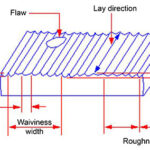
One of the factors to consider when selecting shafts for linear bearings is surface roughness, which describes the microscopic asperities, or peaks, and valleys present on a material’s surface. But surface roughness is an important specification for all types of linear guides and screws — whether plain or recirculating, round shaft or profiled rail, ball […]
Applications
Screw handedness: When do you need a left-handed screw?
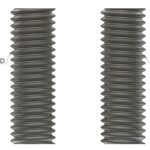
Just like people, ball and lead screws can be either right-handed or left-handed. But in screw terminology, handedness indicates the direction in which the nut moves relative to the direction of the screw’s rotation. By far the most common version is the right-handed screw, in which the nut moves toward you when the screw is […]
What is torque ripple and how does it affect linear motion applications?
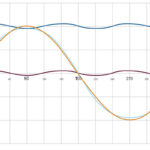
Motors produce torque and rotation through the interaction of magnetic fields in the rotor and the stator. In an ideal motor — with mechanical components that are perfectly machined and assembled and electrical fields that build and decay instantaneously — torque output would be perfectly smooth, with no variations. But in the real world, there […]
New LMHB linear ball bushing can press fit into assemblies

THK America Inc. now offers a type LMHB linear bushing for linear-motion applications. This linear bushing is press-fit into moving elements of linear motion axes to allow smooth traversal of round shaft. The THK LMHB linear bushing achieves smooth and silent motion thanks to the spring effect provided by curved metal plates within the assembly […]
When are stepper motors paired with ball screws (rather than lead screws)?
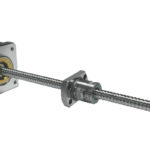
Stepper motors are widely used in industrial and consumer applications ranging from packaging equipment and medical devices to 3D printers and vending machines. They have excellent torque production at (relatively) low speeds — especially for a given motor size — and offer high-resolution positioning in a simple-to-use format. These benefits make them well-suited to drive lead […]
How to choose a lubricant for recirculating linear bearings
All metal-on-metal recirculating bearings require lubrication in order to function properly and provide a reasonable bearing life. Lubrication reduces friction and heat by separating the rolling elements from the bearing raceway, inhibits corrosion, protects bearing surfaces from contamination, and helps seals run smoothly and operate effectively. Although the importance of lubrication is clear, choosing the best […]
Causes of tooth shear in synchronous belts, and how to avoid it
Synchronous belts transmit power via positive engagement between belt teeth and pulley grooves, making them suitable for applications that require high torque and making them less prone than traditional V-belts to slip in dynamic applications. But even synchronous belts can experience failure if they’re not installed, maintained, and applied properly. One way that toothed belts […]
What are common applications for hybrid stepper motor linear actuators?
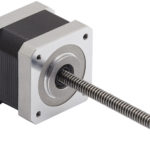
When it comes to electromechanical linear actuators, integrated designs offer space savings, reduced complexity, and lower total cost of ownership with fewer parts required for repair or replacement. One such design that’s found multiple uses in medical, 3D printing, and assembly applications is the hybrid stepper motor linear actuator, which combines a ball or lead […]
How axial and radial loads affect linear motion systems
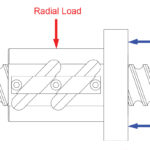
In any motion system, understanding the type and direction of applied and resultant loads is important for determining bearing life and analyzing deflection. In linear motion systems, we typically use Cartesian coordinates (X, Y, and Z) to define the placement and direction of loads. But for rotating components such as screws, rack and pinion drives, […]
Piezo motors vs. voice coil actuators for micron and sub-micron positioning
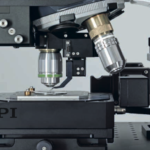
Applications that require micron or sub-micron level positioning with extremely smooth motion and control often call for a direct drive system — linear motor, piezo motor, or voice coil actuator. Linear motor stages are typically used when high forces are needed over stroke lengths greater than a few hundred millimeters. But for high-precision applications with […]