by John Feitl, Senior Application Engineer and Larie Butler, Marketing Communications Specialist, NSK Americas Ball screws have an efficiency that makes them suitable for use in actuators that drive industrial and automotive applications, including robotics, machine tool axes, and semiconductor wafer-transport systems. Here we review the different ball screw subtypes and where each one excels. […]
Ball + leadscrew driven
Steinmeyer Xi-Plus line of precision ball screws: Smoothest raceways ever deliver quiet performance

Steinmeyer now sells a new ball screw line called Xi-Plus. These screws feature the manufacturer’s smoothest raceway surface ever to get significantly quieter operation with reduced vibration for every application. More after the jump. Xi-Plus precision ball screws are manufactured in Germany like all Steinmeyer products. The ball screws undergo a proprietary finishing process that removes micron-sized defects […]
Next-gen electric actuators for high forces

Curtiss-Wright Sensors & Controls Division has announced the release of its next-generation Exlar® brand FTX Series actuators. These high-force electric rod style actuators now offer higher performance and ease of maintenance than previously available. The FTX Series actuators leverage more than a decade of experience successfully replacing hydraulics in high-force, high-duty cycle applications in harsh […]
Haydon Kerk adds mold flow Analysis software for rapid custom lead screw nut solutions

Haydon Kerk Motion Solutions recently added a powerful mold flow analysis software to help with the design of custom-molded lead screw and linear motion components. Solid Works Plastic Professional is an engineering tool used by Haydon Kerk’s experienced tooling engineers to help speed up the design process and offer customized solutions to fit customer’s application […]
How to size and use stepper motors that integrate rotary-to-linear motion?
No motor subtype satisfies all applications, as all have their own benefits and drawbacks. Even so, axes that need incremental strokes often use dc motors that are either stepper or servomotors. Very advanced designs incorporate linear motors to do away with gearboxes, belts and pulleys, ballscrews, leadscrews, and other power-transmission components — for high accuracy […]
Thomson Increases Design Flexibility for Machine Engineers

Thomson Industries, Inc. has built upon its selection of miniature metric precision ball screws to include three common interface styles: flanged, threaded and rounded. This comprehensive offering equips customers with even more options when designing small-space applications. These metric ball screws deliver a host of performance, supply chain and pricing benefits for users seeking smooth, […]
What’s the use of a force versus linear velocity chart?
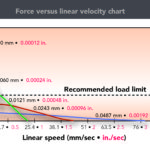
Force versus linear velocity charts are mainly a tool for engineers specifying screw-based linear actuators. In short, the charts help engineers pick the actuator screw resolution after settling on a given actuator frame size. Much like references that describe the capabilities of rotary motors alone, there are similar metrics that describe the capabilities of linear […]
Thomson FSI style Metric Precision Ball Screws now have faster delivery times

Thomson Industries, Inc., has further enhanced its customer offerings in North America by utilizing its domestic manufacturing facilities to deliver high-quality, German-engineered metric ball screws with shorter lead times. As only two percent of all metric ball screws sold in North America are manufactured domestically, customers typically are forced to wait up to 10 weeks […]
How to choose end fixity conditions for screw applications
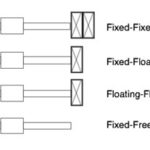
Ball and lead screw assemblies consist of three main components: the screw shaft, the ball nut, and the end support bearings. More than just an accessory, end support bearings have a significant influence on the rigidity, maximum speed and buckling load of screw assemblies. There are two primary types of support that can be implemented for […]
How to calculate motor drive torque for ball screws
When sizing a motor, one of the most important factors is the required torque. In general, motor torque-speed curves outline two primary areas of permissible torque: continuous and intermittent. Intermittent motor torque is allowed only for a short time (specified by the manufacturer) and in most cases is the torque required during acceleration. A motor’s […]