

Question: “I’m designing a new linear motion system. Should I design it for high accuracy or repeatability? Or both?” Before we answer this question, let’s define accuracy and repeatability for linear systems… Accuracy In linear motion, there are two generally categories of accuracy – positioning accuracy and travel accuracy. Positioning accuracy specifies the difference between […]
Rack + pinion driven
Gallery: Rack and pinion systems – designs and applications
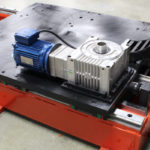
Rack and pinion drives are commonly used in large gantry robots and material handling systems for their ability to achieve high-speed movements over long travel lengths. The most common rack and pinion systems for industrial automation consist of a linear rack (also referred to as a “linear gear”), a pinion (also referred to as a “circular […]
High-speed linear actuators: What qualifies them as high speed?
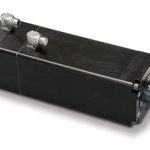
Like many terms used in the linear motion industry, such as “heavy duty,” “miniature,” and “corrosion-resistant,” to name a few, there is no industry standard that specifies what constitutes a “high-speed” linear actuator. Nevertheless, there are some general guidelines that manufacturers follow when classifying and marketing their actuators as high speed. These guidelines are typically […]
Linear actuators: belt driven vs. rack and pinion driven
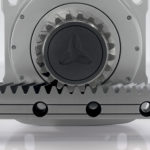
Belts and rack and pinions have several common benefits for linear motion applications. They’re both well-established drive mechanisms in linear actuators, providing high-speed travel over extremely long lengths. And both are frequently used in large gantry systems for material handling, machining, welding and assembly, especially in the automotive, machine tool, and packaging industries. Timing belts for linear […]
Profiled rail + rack & pinion = integrated solution
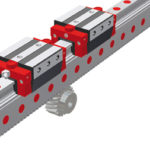
Profiled linear guides are typically used in conjunction with a drive system, such as a belt or ball screw, to provide rigid, accurate motion. When the specification calls for extremely long travel and high thrust force, the drive mechanism of choice is commonly a rack & pinion system. Fortunately for design engineers and machine builders, several […]
What are the main types of linear actuators?
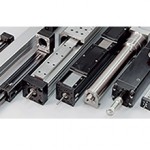
Updated August 2017 || Linear actuators come in myriad configurations to suit almost any application, environment or industry. They’re primarily categorized by their drive mechanism; then manufacturers use other features such as the type of guide and housing to further differentiate them. Below is an explanation of the most common linear actuator categories. Belt-driven and […]
Five things to consider in vertical applications

Mounting orientation is one of the core considerations when sizing and selecting a linear actuator. Depending on the type of linear guides used, some actuators can support higher downward or lift-off loads than side loads, or can handle pitch and yaw moments better than roll moments—all important factors when evaluating an actuator for vertical duty. […]
Choose the best linear positioning device for your application
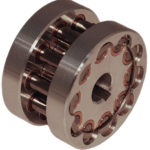
by Tony Kliber, Lead Design Engineer, Nexen Group Reviewing the basics about the most popular linear positioning devices will help users properly specify them in their applications. Linear drive systems have been used for thousands of years, as far back as the ancient Egyptians who used tree trunks to move heavy blocks of stones, providing […]
A selection guide for linear systems
Gone are the days when machine designers and builders had to choose between constructing their own linear system from scratch or settling for a limited range of pre-assembled systems that, in most cases, were an imperfect fit for their application. Manufacturers today offer systems based on a range of drive mechanisms—ball screws, belts, rack and pinions, linear motors, […]
Three factors critical to servo motor sizing for linear motion systems
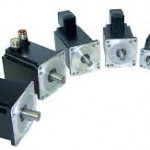
Selecting the right servo motor for a linear motion system is a complex task, beginning with initial assumptions and component selections, which must be checked through a series of calculations and, in most cases, repeated over several iterations until a suitable combination of motor and mechanics is found. Most motor manufacturers offer online sizing tools that make […]