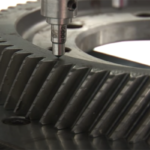
Hardness is a common specification for linear shafts and guides — especially those used with ball and roller bearings, where the guide encounters extremely high loads over very small areas. The hardness of a bearing surface can significantly affect the life of the system and is often accounted for by applying a hardness correction factor […]
Ball + roller guides
What is cage creep and why does it matter?

Several types of non-recirculating linear bearings use a cage to contain the rolling elements, maintain consistent spacing between them, and ensure even load distribution. But in each of these non-recirculating designs, the cage “floats” between the two moving components, meaning that it’s not constrained and can gradually move away from its intended, centered position. This […]
Ball spline preload: How, why, and when it’s applied
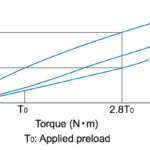
Like other linear motion components where rolling elements ride in raceways, ball splines can be supplied with preload. In the case of a ball spline, the main purpose of preload is to reduce angular backlash — clearance in the rotational direction — when torque is applied. Without preload, ball splines have a small amount of […]
Gothic arches, tracks, and roller bearings in the context of linear motion

Industry terminology used to describe linear guides and other linear components widely varies. Here we explain three linear-guide phrases and words having multiple meanings — and differentiate how they relate to track-roller linear guides and profiled-rail linear guides. Let’s start by reviewing the multiple linear-motion meanings for Gothic-arch linear bearing. Gothic arches originate from civil […]
How to make linear motion systems cleanroom compatible

While we often talk about the importance of keeping contamination out of linear motion components such as linear guides and screws, when these systems are used in a cleanroom, the goal is just the opposite — to keep these components from introducing contamination into the environment. What exactly is a cleanroom? According to ISO 14644-1:2015, […]
How do miniature profiled rail guides compare to their full-size counterparts?

The basic distinction between “standard” and “miniature” profiled rail guides is the width of the guide rail: profiled rails with a width of 15 mm or less — and the carriages that fit on them — are generally considered “miniature” by bearing manufacturers. (However, some manufacturers also produce 15 mm rail guides in standard versions, as we’ll […]
The top 10 linear motion articles of 2020

Suffice it to say, pretty much everything about 2020 has been out of the ordinary, and our recap of the top linear motion articles for this year is no exception. For the first time in recent history, only one (1!) of the top 10 articles is about ball or lead screw technologies — a topic that usually […]
Linear bearing seals: Types, options, and applications
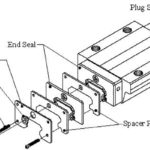
Seals for recirculating linear bearings serve two functions — keeping contamination out and keeping lubrication in — to ensure the system operates properly without premature wear or failure. Because sealing is so critical to linear bearing systems, manufacturers offer a variety of sealing designs and materials to meet a wide range of applications and environments. […]
How to size a spline shaft: Shaft strength in bending and torsion
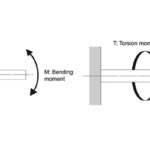
Choosing a shaft for a traditional linear ball bushing is relatively easy — choose the appropriate diameter, material, and hardness, check the dimensional accuracies and tolerances, and if the shaft is unsupported, perform a beam deflection calculation. But because spline shafts can withstand both radial and torque loads, it’s important to ensure the shaft strength […]
How to calculate bearing life for a ball spline
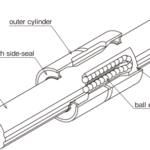
A ball spline is much like a linear ball bushing and shaft, but with axial grooves along the outer diameter of the shaft and the inner diameter of the nut. These grooves prevent rotation of the bearing (referred to as a spline nut) and allow the ball spline to transmit torque. Because a ball […]