Here we compare conventional wired readheads to capacitive readheads in linear-sensing technologies.
Michael Driker · Mechanical Engineer M.Sc. | KappaSense
Linear guides support and control precision linear travel on axes in myriad machine and robotics types for modern automation. In linear-motion applications that are especially demanding, linear position feedback is needed to ensure the tool, gripper, or workpiece follows preprogrammed paths and reaches precise positions. In such machine designs, engineers often employ linear encoders on the most critical axes. Here, it’s common to source a separate linear encoder or linear guides with the encoder built-in. The letter is preferred in many if not most applications.

Most manufacturers’ built-in linear encoders integrate a scale on the linear guide’s rail and integrate a readhead into its moving carriage. However, one disadvantage of such arrangements is that electrical cable tethered to the encoder readhead must move with carriage. That in turn necessitates a specialty cable-carrying arrangement that can complicate the design and maintenance routines.
As we’ll explore, another linear-guide sensing technology uses capacitive operation for a cable-free readhead that avoids these and other issues.
Wired readheads are the conventional choice
In conventional linear encoders, the readhead connects to the controller and power via cables. The cables to carry the electrical signals (analog or digital) are shielded. The scale mounts in a groove machined into the side or upper face of the rail. The scale may be protected against water ingress, dust, or debris by a cover.

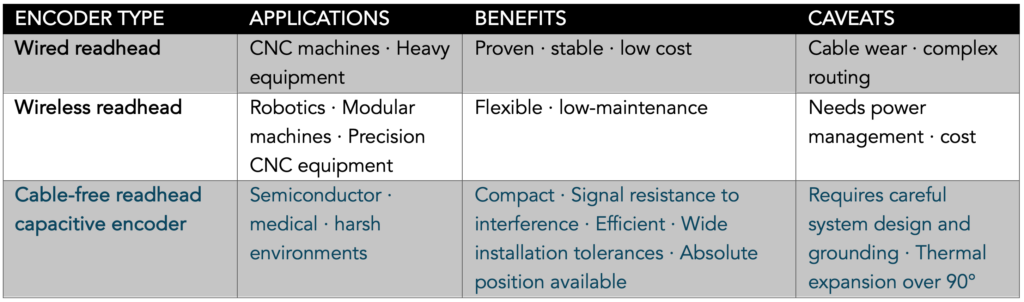
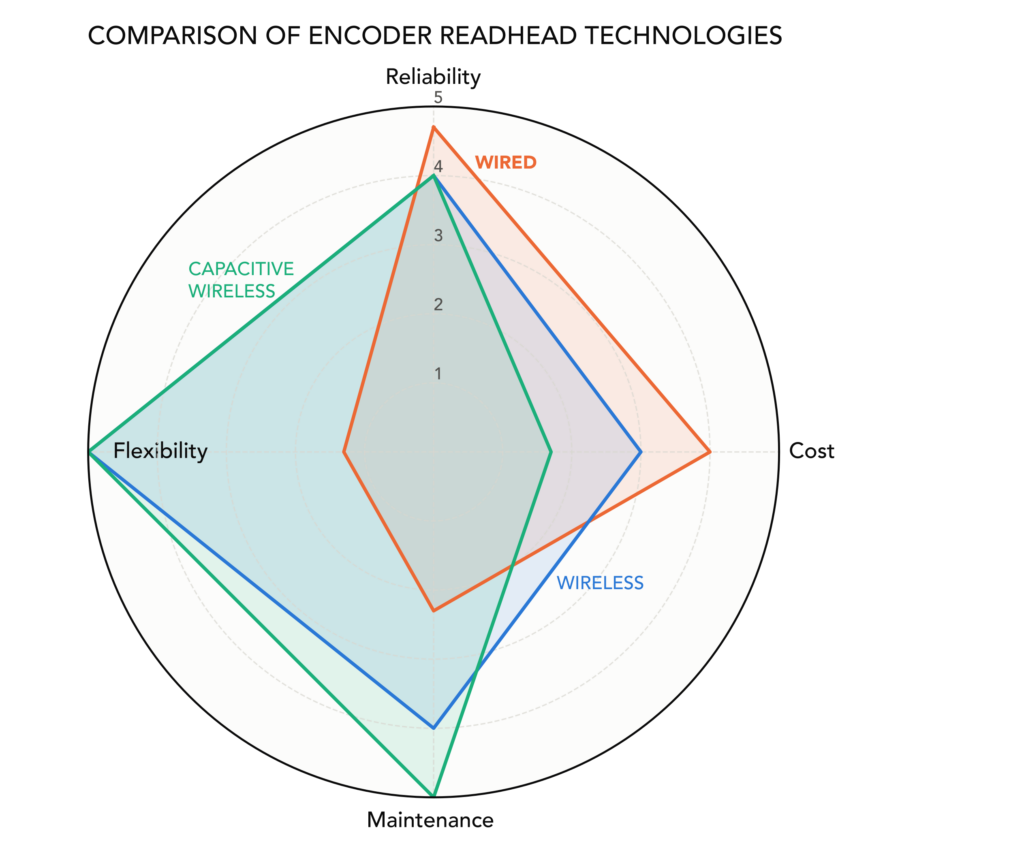
Wired linear-encoder technologies are well established in industrial automation. Power is supplied through the same wiring harness used for signal transmission. This proven, reliable technology delivers stable signal transmission that is unaffected by wireless interference, and it is compatible with most standard motion controllers. No batteries are required because power is supplied directly via the cable. As a result, wired readheads remain the conventional choice: a reliable, cost-effective solution offering stable, proven signal transmission and broad compatibility with existing controllers and machine designs.
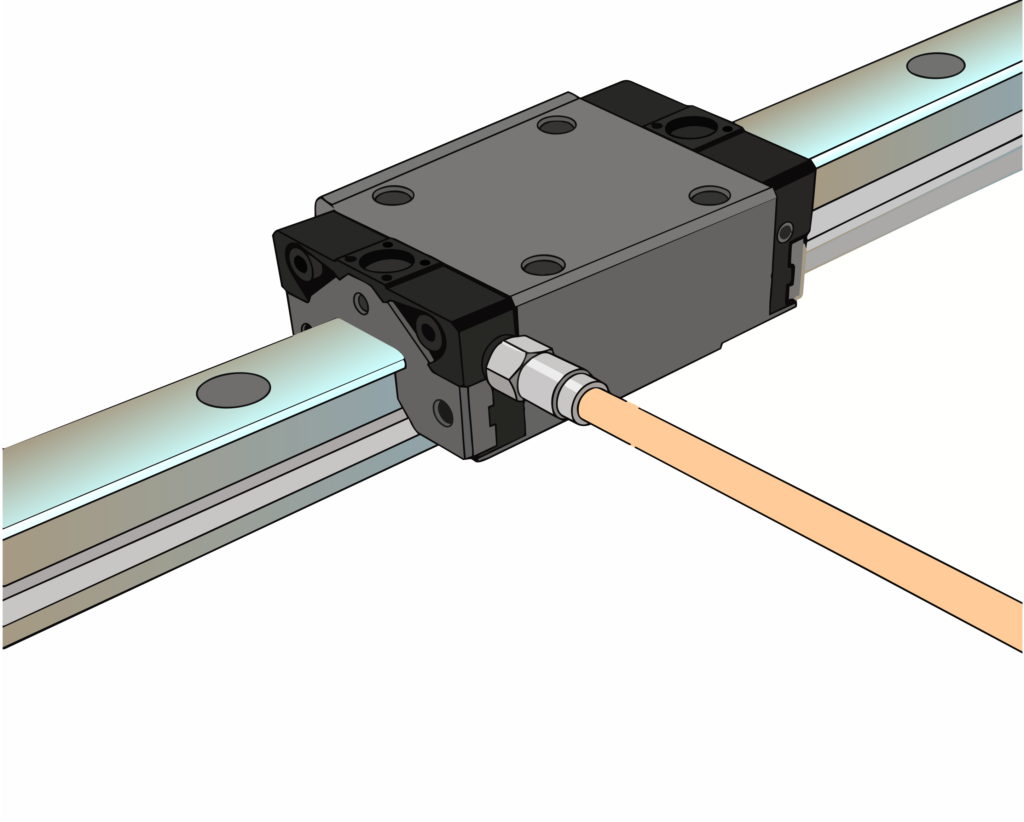
There are limitations and drawbacks to these technologies, though. Cable routing is complex, especially in multi-axis systems or tight installations, and this complexity reduces overall system flexibility. The cables themselves are susceptible to wear, fatigue, breaks, or insulation damage from continuous movement, and long cable runs can also introduce signal noise. Together, these issues increase maintenance overhead. That’s because replacing or managing cables adds both downtime and cost.
Wireless readheads as a modern alternative
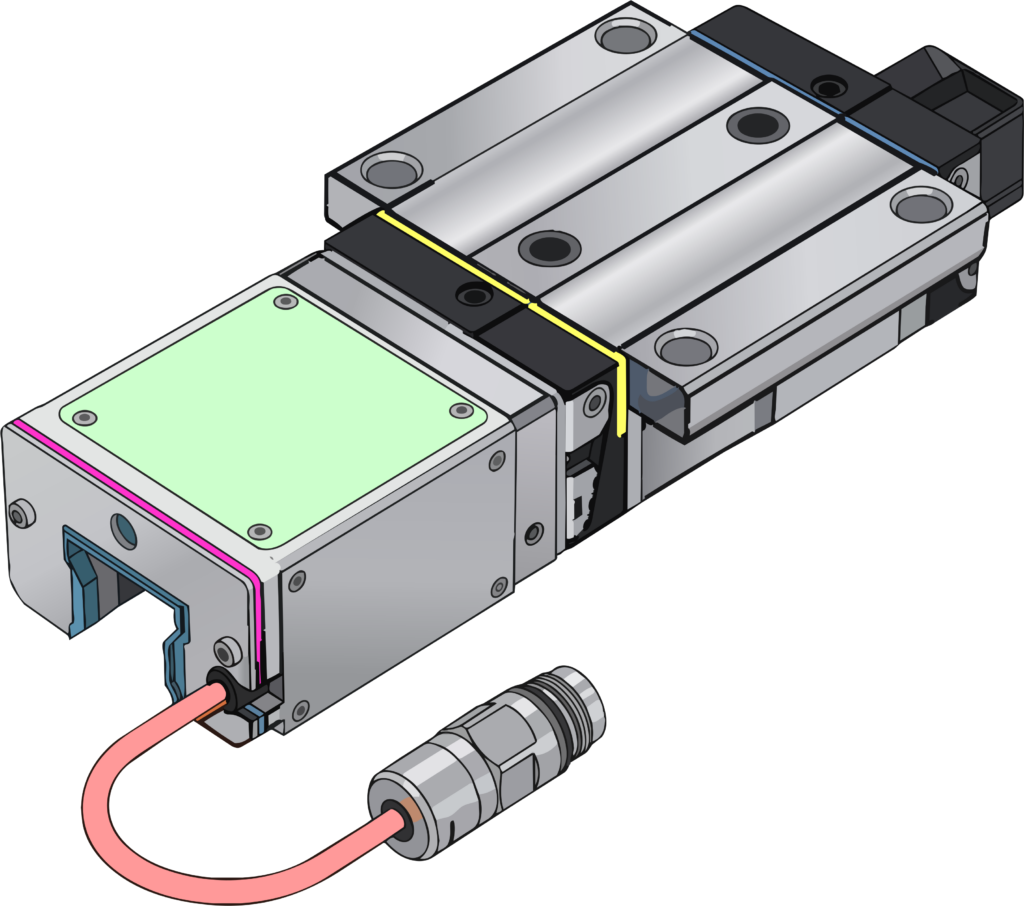
As wireless communication and power technologies advance, the shift from wired to wireless encoder readheads is expected to accelerate. Linear encoders with wireless readheads fit into this trend … wirelessly transmitting signals to the controller.
More specifically, data transfer occurs via a radio frequency (RF) or optical wireless link. Power is provided through a battery, energy harvesting, or inductive power transfer.

This and capacitive sensing offer several advantages. The overall design can be simpler, because there’s no need for cable carriers, drag chains, or conduits … so axes are more reconfigurable. There are also no cables to wear out or replace. Machine layout is easier and oftentimes the axis assemblies can be more compact than those with traditional encoding hardware. Reliability in tough environments is also higher, as fewer connectors mean fewer disconnect points. All this helps wireless linear encoding support Industry 4.0 and smart-factory initiatives.

Challenges include potential signal interference in noisy industrial environments, power management requirements for battery-based heads, and higher initial system cost.
Applications include long-travel moving axes, rotary stages, and modular machine setups. In CNC machines, the technology delivers high precision with reduced wiring complexity. In robotics, it enables flexible integration in articulated arms and linear actuators. In the semiconductor industry, it’s cleanroom-friendly and produces no cable dust or wear. In medical devices, cable-free linear encoder technology offers a compact low-maintenance solution. The technology is also well suited to high-speed automation systems requiring ultra-precise feedback as well as applications that operate in vacuum settings.
Benefits of capacitive sensing
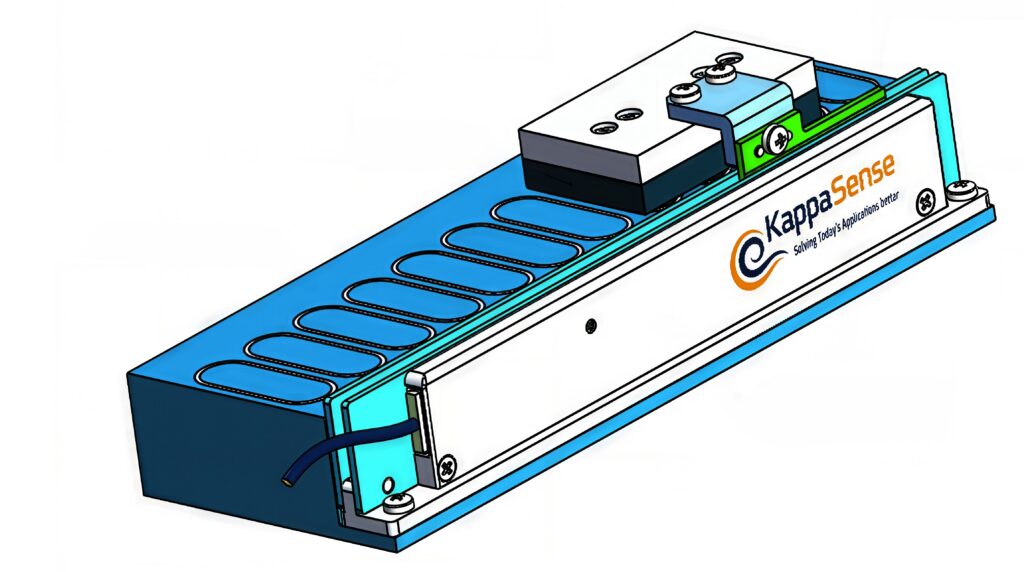
Integrated linear encoders commonly use magnetic or inductive technologies rather than optical versions they’re more resistant to dust, debris, and liquid. They can also tolerate some variation in the gap between the sensor and the scale which can be an issue if the axis is subject to shocks or vibrations. Capacitive sensing offers these benefits plus is immune to electromagnetic interference whether of internal and external origin.
 KappaSense | kappasense.com
Michael Driker is a mechanical engineer and project lead at KappaSense.

Leave a Reply
You must be logged in to post a comment.