Here we explore the design elements that are necessary for robot track units (RTUs) and gantry robots to successfully operate in different kinds of extreme environments.
By Brenda Courim • Molly Lynch | Güdel Inc.
Factory operating environments are as diverse as the products made in them. Some settings (for the production of electronics, pharmaceuticals, and medical devices) are spotless. Cleanrooms for semiconductor manufacturing are nearly sterile — only allowing ten particles of 0.1 µm or greater per cubic meter of air. On the other end of the spectrum are factories housing processes that make for environments hostile to the manufacturing equipment itself, with dirt, metal chips, weld slag, paint overspray, and worse. Yet other factories are relatively clean but extremely hot or cold and inhospitable to automation equipment — as in cold rooms and freezer storage, for example.
Let’s explore different extreme environments and the engineering and product requirements to successfully deploy linear motion in the form of RTUs and gantry robots in those places. Here, some engineers might stop and ask: What about the six-axis robotic arms riding on the RTUs? Well, such robots are actually easier to protect than linear systems. The structure of the standard robot (whether traditional industrial or collaborative) allows for the enclosure of drivetrains, bearings, sensors, and lubrication. Their joints’ rotary axes lend themselves to gasketing and seals that keep contaminants out.
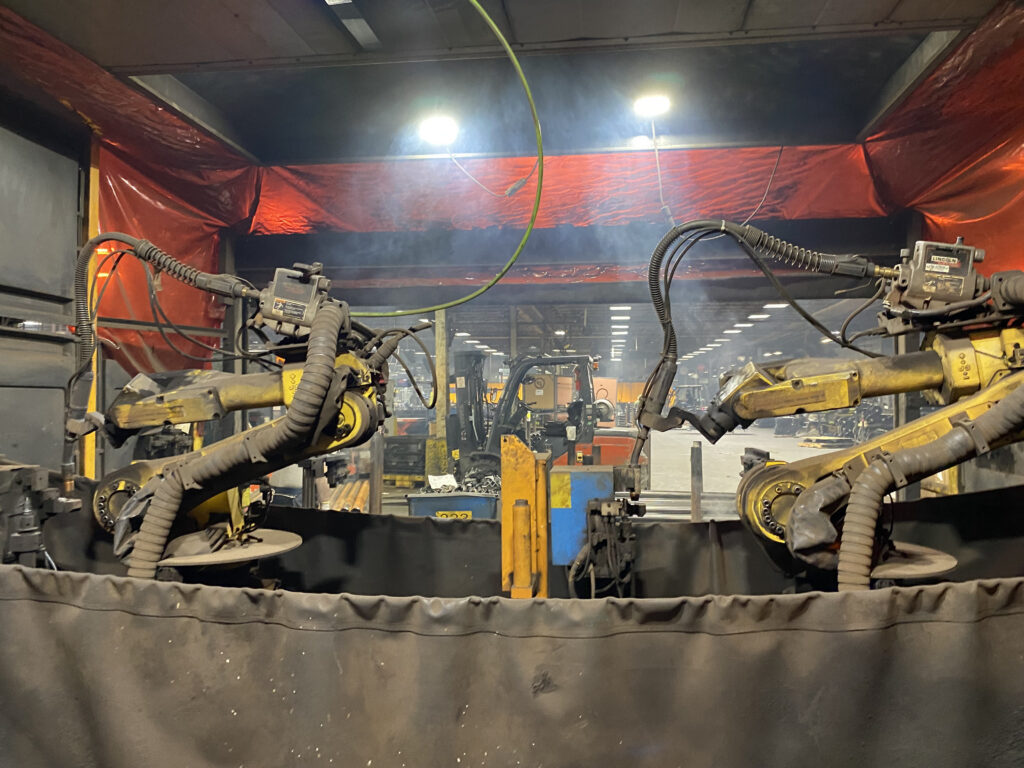
Major robot companies offer models for high-temperature applications having specialized paint, gaskets, cables, and lubrication. The same holds true for washdown environments (where the robot may be exposed to high-pressure water spray) and paint applications in which overspray requires sealed explosion-proof motors.
The challenge of protecting RTUs and gantry robots
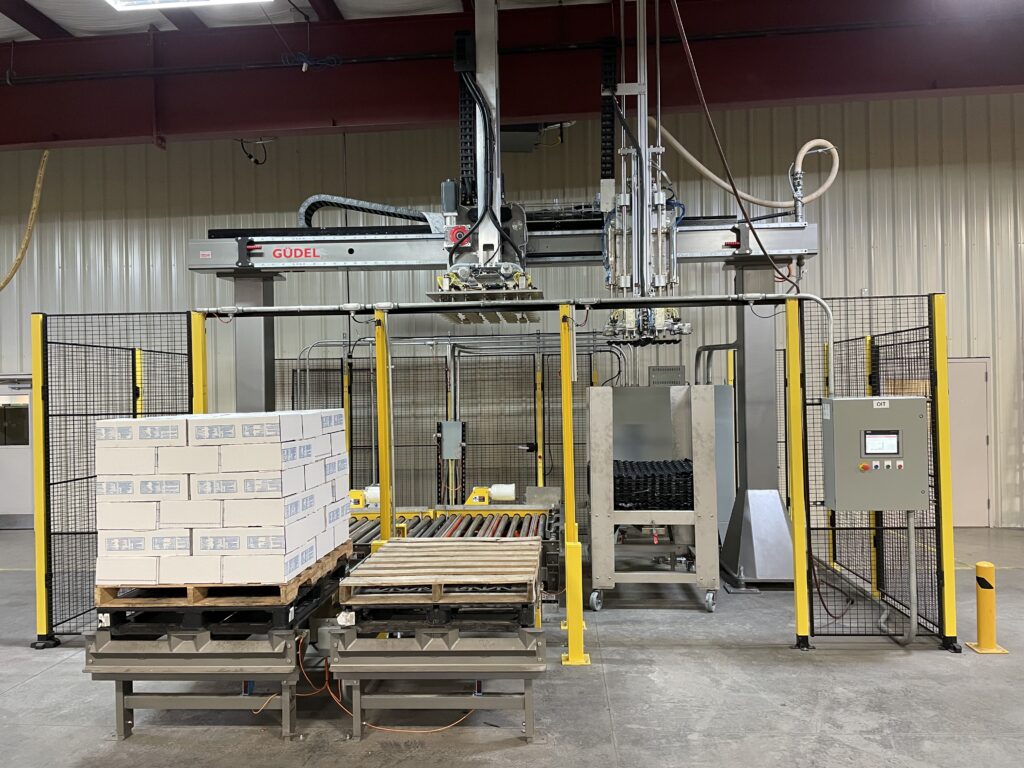
If six-axis robots are straightforward to protect, RTUs and gantry robots are not. The fundamental design of these linear-automation systems brings unique challenges. Both the rack-and-pinion drivetrain and the linear bearings and rails are open and exposed to the environment. What’s worse, floor-mounted RTUs are subject to weld slag, machining chips, and paint overspray raining down on them. For these RTUs and gantry robots, the operating environment isn’t a secondary consideration … it’s a core design input.
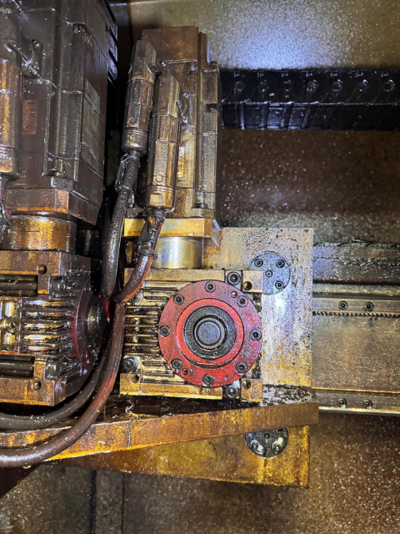
Bearing technology is key in dirty environments
There are two types of bearings deployed in RTUs and gantry robots: Linear bearings with profile guideways and cam followers. Linear bearings consist of a series of small recirculating round or cylindrical bearings in a linear housing that continuously cycles through a load-bearing zone and loops back around as the housing travels. The issue with this design in harsh environments is that small particles can easily enter the housing and cause the linear bearing to lock up and freeze.
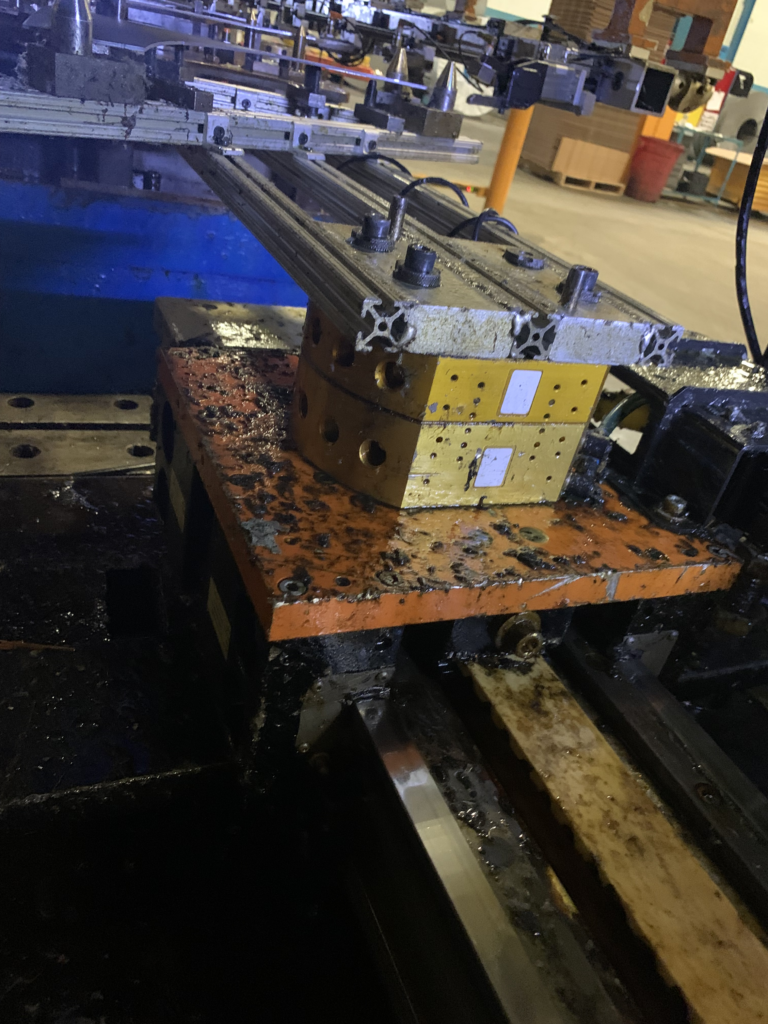
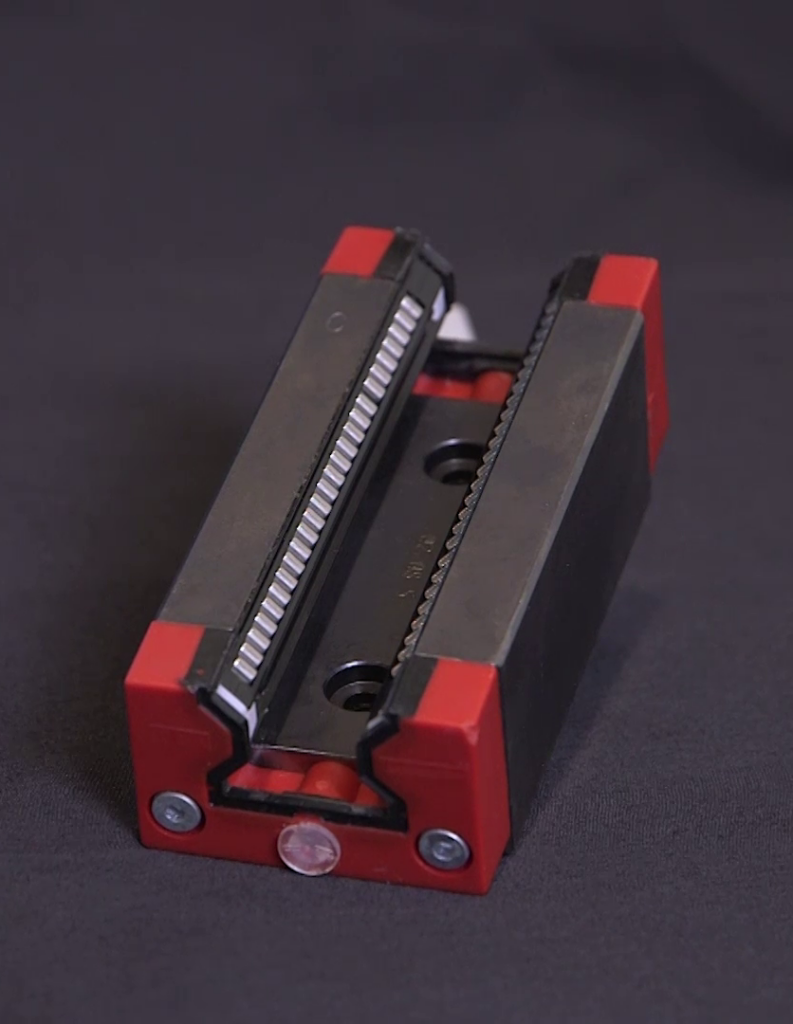
In RTU applications, the mean time to repair or MTTR for a profile-guideway linear bearing failure is considerable. First, the robot must be removed from the carriage, which may need extensive rigging in a crowded work cell. Next, the carriage must be removed from the track, including disconnecting cables and pulling the motor. After the failed bearing is replaced, the RTU is reassembled and all the robot points must be validated and possibly corrected.
In contrast, some rugged designs pair cam followers with flat rails for the linear-bearing function. Here, an array of cam followers mount into a precision-machined cast carriage housing. The bearing elements are inside roller cartridges inserted into the cast housing. Brass scrapers and felt wipers clear debris off the rail, and any small particles that pass through are simply crushed and cleared. Because the bearings are sealed in rollers, they are never exposed to any contaminants.
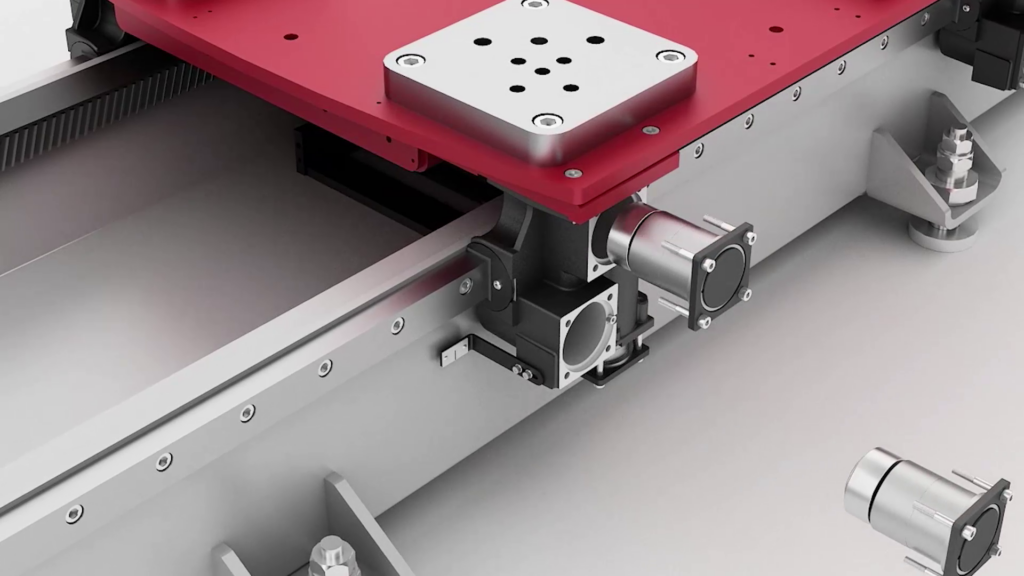
The roller-bearing cartridges inside the cam followers are quick to adjust and replace if needed. In addition, the RTU carriage can be in any position on the track, and there’s no need to remove the robot or carriage during servicing. MTTR is measured in minutes not days or hours as is common with RTUs relying on profile-guideway linear bearings.
Robotic linear motion in high-temperature environments
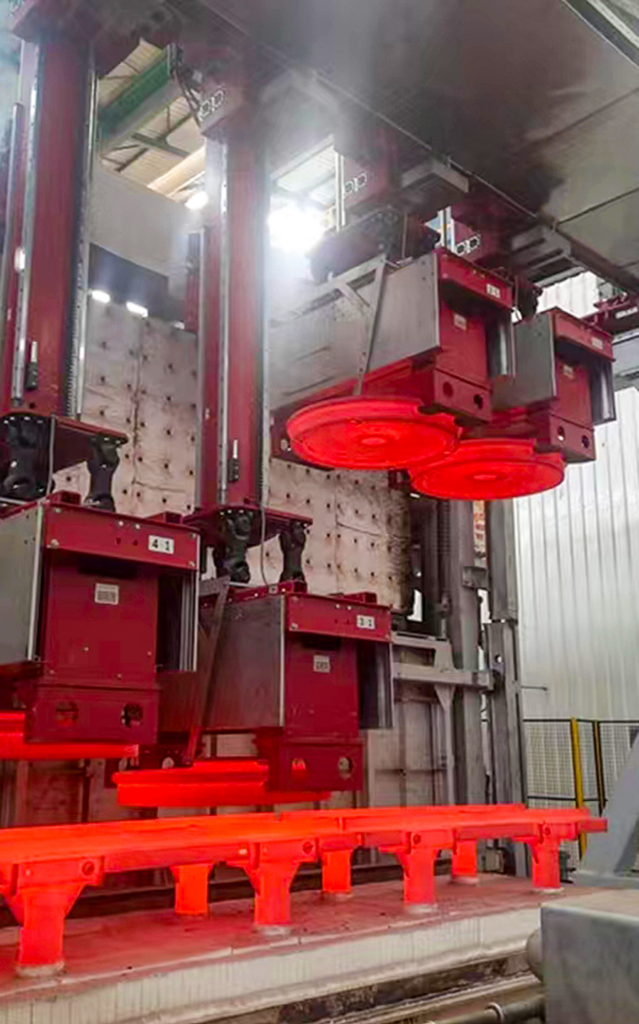
Many RTUs and gantries operate in extremely hot environments — near die casting, investment casting, forging, heat treating, and sintering. Here, aluminum-based RTUs and gantries aren’t recommended … especially if heavy payloads are involved … as permanent deformation and warping can occur.
That said, even steel systems can still have challenges. Radiant heat is a major issue in high-temperature applications, whether the heat comes from the process or the parts.
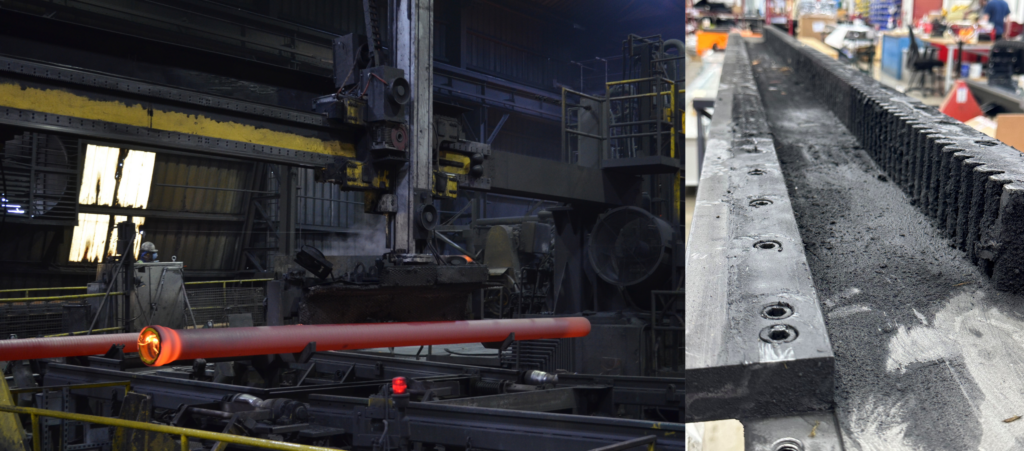
So, when handling extremely hot parts, grippers and other components should be shielded from the direct radiant heat. Standard lubricants — gearbox oil and the grease for the rack, rail, and pinion — should be replaced with high-temperature formulations. In addition, seals on gearboxes must be changed out for high-temperature versions. In the same way, standard automatic-lube systems should be replaced with high-temperature models, and plastic tubing to distribute the lubricant must be replaced with high-temperature-rated metal tubing. Standard plastic e-chains should be replaced with high-temperature versions or metal components that can withstand the actual working environment.
Standard paint won’t survive extreme high temperatures and should be replaced with coatings rated for high-temperature exposure. Lastly, brass scrapers and felt wipers in the roller-block assemblies may need more regular replacement.
Robotic linear motion in low-temperature environments
Commonly found in food manufacturing and logistics facilities, extreme-cold applications are commonly classified as 0° F, -20° F, or -40° F. Each level needs different design adjustments.
As in hot applications, low temperatures necessitate replacement of standard grease and oil lubricants with products — in this case, rated for low temperatures. Plastic tubing for lubricant distribution may have to be replaced to satisfy bending-radius requirements. Seals must be replaced with products that will maintain elasticity in low temperature. It’s also common to add Armoloy coating to racks and rails to protect against condensation.
Brakes may need upsizing to compensate for reduced stopping coefficients in cold temperatures. Installation in cold environments is also a challenge due to the thermal contraction of the metal, particularly in larger configurations.
One additional consideration: RTUs and gantry robots are manufactured in typical ambient temperatures, so they will need calibration and adjustment after installation and acclimation to the cold environment.
Robotic linear motion in paint applications
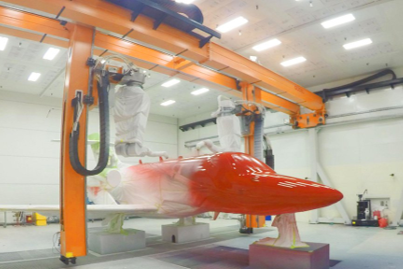
RTUs and gantry robots are common in the large-scale painting of aerospace, automotive, defense, rail, and off-highway equipment manufacture. But with large scale painting comes copious overspray and airborne paint particles.
Overspray can accumulate over time and cause real problems in linear bearings. Some companies attempt to cover the exposed linear-motion components, but covers are unsuitable at best and can even trap paint that has slipped through. In contrast, cam followers with sealed roller bearing cartridges handle painting applications with ease, pushing overspray off the rails. Bronze scrapers in the cam-follower bearing housings easily remove dried-on buildup as well.
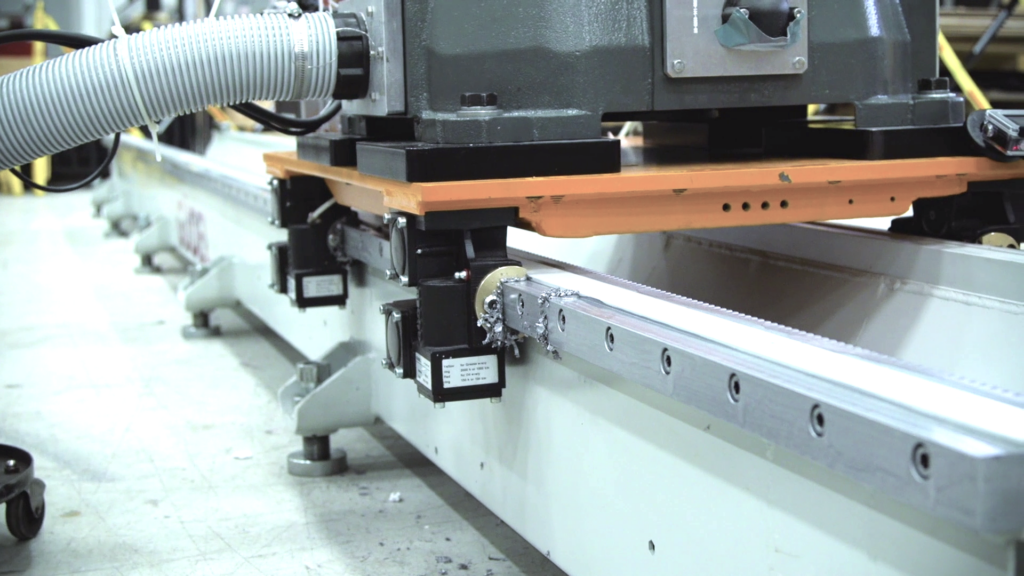
To reduce adhesion of material onto working surfaces, the drive racks and linear-bearing rails are often coated with Armoloy plating. For overhead configurations, to avoid contamination of workpiece surfaces, these linear subcomponents are commonly run without lubrication.
Of course, overspray of solvent-based paints quickly creates an explosive environment. So, all motors in such settings must have a C1/D1 explosion proof rating or must be enclosed in a separate housing with the same level of protection.
Robotic linear motion in wet environments
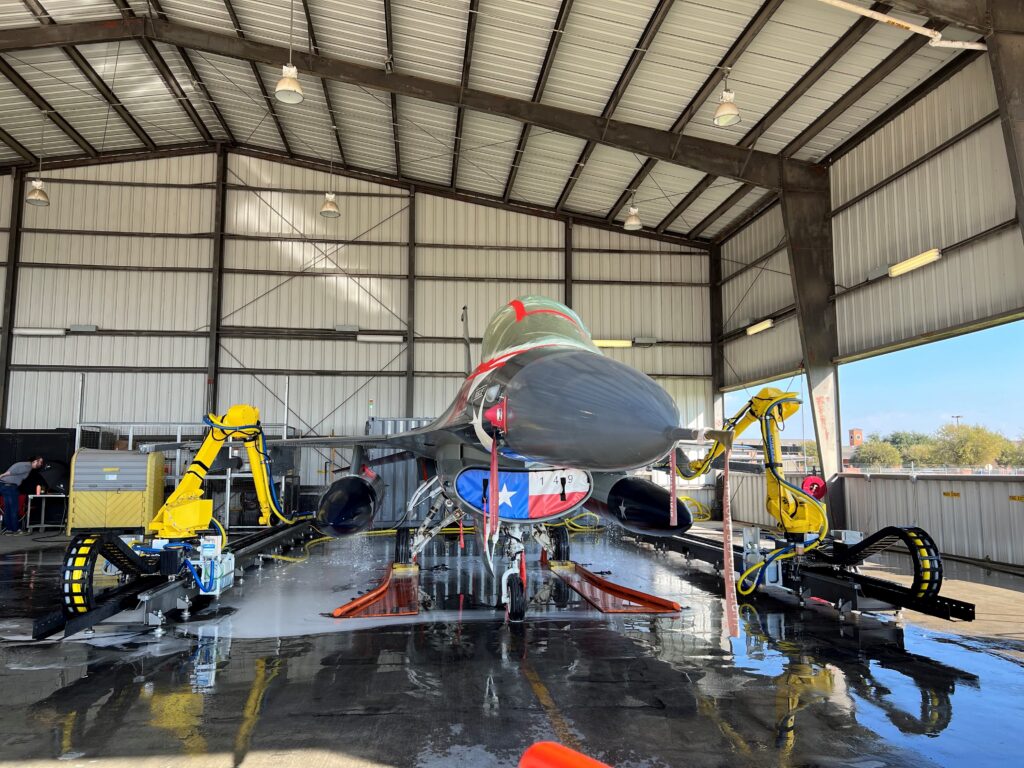
RTUs and gantry robots are also deployed in aerospace, military, and heavy-equipment washdown applications. Often, cleanup occurs after a craft or vehicle has operated in a harsh setting … for example, over oceans where salt condensation can occur. In other applications, the cleaning might be immediately prior to a painting process.
RTU and gantry linear motion based on cam followers having sealed bearing cartridges is suitable for these wet environments. For pre-paint cleaning routines, the bearings’ linear rails and drive rack is (to prevent contaminating the paint surface) run without lubrication.
Robotic linear motion in outdoor automation
The ultimate challenge? Taking automation out of the factory to the great outdoors. The robotics industry is seeing huge interest in automating applications in building and construction applications suffering from the same labor shortages as manufacturing.
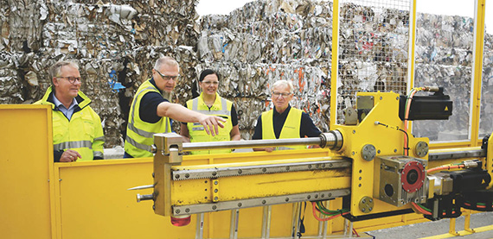
Emerging applications include the 3D printing of houses and other structures; field assembly of modular building sections; concrete finishing, cutting, and drilling operations; and recycling and recovery public works.
Güdel | youtube.com/@GudelGroup

Leave a Reply
You must be logged in to post a comment.