
According to the Energy Information Administration (EIA), the Industrial sector was responsible for 51 percent of global energy consumption in 2011 (the latest year for which figures are available). Of the Industry sector’s energy use, 25 percent was in the form of losses. This represents a huge opportunity, not only for cost savings to manufacturers, but also for improvements in efficiency and environmental impact. But what can an engineer or designer do to reduce energy use, improve equipment efficiency and help protect the environment?
Size matters
For starters, when choosing components, ensure they’re properly sized for the application. For linear motion components and systems, no other aspect of design has as much influence on energy use and efficiency as their physical size. Not only does proper sizing ensure the best performance for the application, avoiding waste in terms of scrap, rework, and over- or under-production. It also ensures that the driving equipment, whether electric, pneumatic, or hydraulic, is not oversized, which results in higher energy consumption.
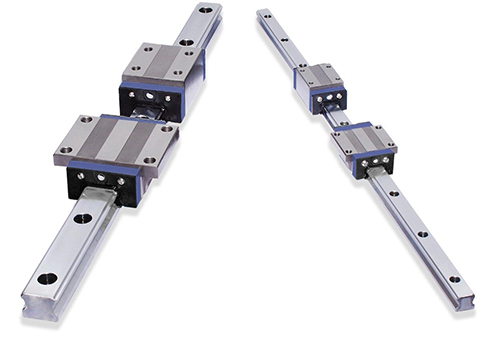
Take a linear bearing for example. Larger bearings generally weigh more and have a higher friction force to overcome, so the drive mechanism—ball screw, pneumatic cylinder, rack and pinion, etc.—must be able to produce more force than would be necessary for a smaller bearing. In addition to the increased force requirements, larger bearings also have higher inertia, which means that a larger motor may be needed in order to achieve a suitable inertia match. And a larger motor means a larger coupling and mount. Now the entire system is significantly heavier and requires more torque and inertia to achieve the desired performance. And while safety factors are important in equipment design, often these safety factors are multiplied with each component, leading to a greatly oversized and relatively inefficient system. Size properly, with sufficient safety factors, but be mindful of the drawbacks of oversizing.
Maintenance makes a difference
Another important factor that influences energy use and equipment efficiency is maintenance. As rolling or sliding surfaces become worn and lubrication breaks down, friction increases and efficiency decreases. This causes motors, gearboxes, and cylinders to produce more force or torque, therefore using more energy than should be necessary for the intended application.
Although the task of maintaining equipment happens well after the engineering phase, machines that are designed and built for ease of maintenance are more likely to be properly serviced. And many linear components and systems now come with low-maintenance options, such as ball chains for profiled linear bearings and built-in lubrication units for linear guides and ball screws.
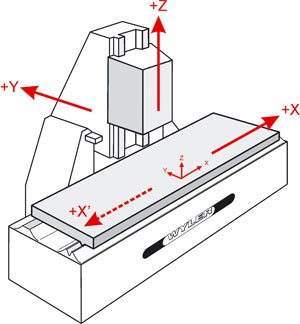
Reducing the quantity and intervals for lubrication can also have a significant impact on the environmental footprint of a machine. A typical machine tool will have at least three linear axes of motion, with four bearings per axis, for a total of twelve bearings per machine. With approximately 250,000 machine tools produced each year, that’s over 3 million linear bearings to be lubricated! The potential for environmental impact due to lubricating greases and oils is considerable. Not to mention the energy required to move the axes. And this estimate is only for machine tool applications—not counting general automation, packaging, electronics, or the numerous other industries where linear components are used. By making it easy for users to monitor equipment and perform necessary maintenance, engineers and designers can indirectly reduce the energy footprint and environmental impact of virtually every type of Industrial equipment.
Most of us make environmentally-friendly decisions at home: choosing the economy-sized refillable bottles, using programmable thermostats, and switching to CFL or LED light bulbs. We do this not only to reduce our impact on the environment, but also for the economic gain, and rightfully so. The same opportunities to make choices that have both environmental and economic benefits also exist in our daily work, and in many cases, have even farther-reaching effects.

Leave a Reply
You must be logged in to post a comment.