NewTek linear position sensors are used in space industry applications in flight vehicles and ground-based testing. The company’s LVDT position sensors are designed to provide non-contact position feedback in conditions that can include cryogenic temperatures, shock, vibration and vacuum environments.
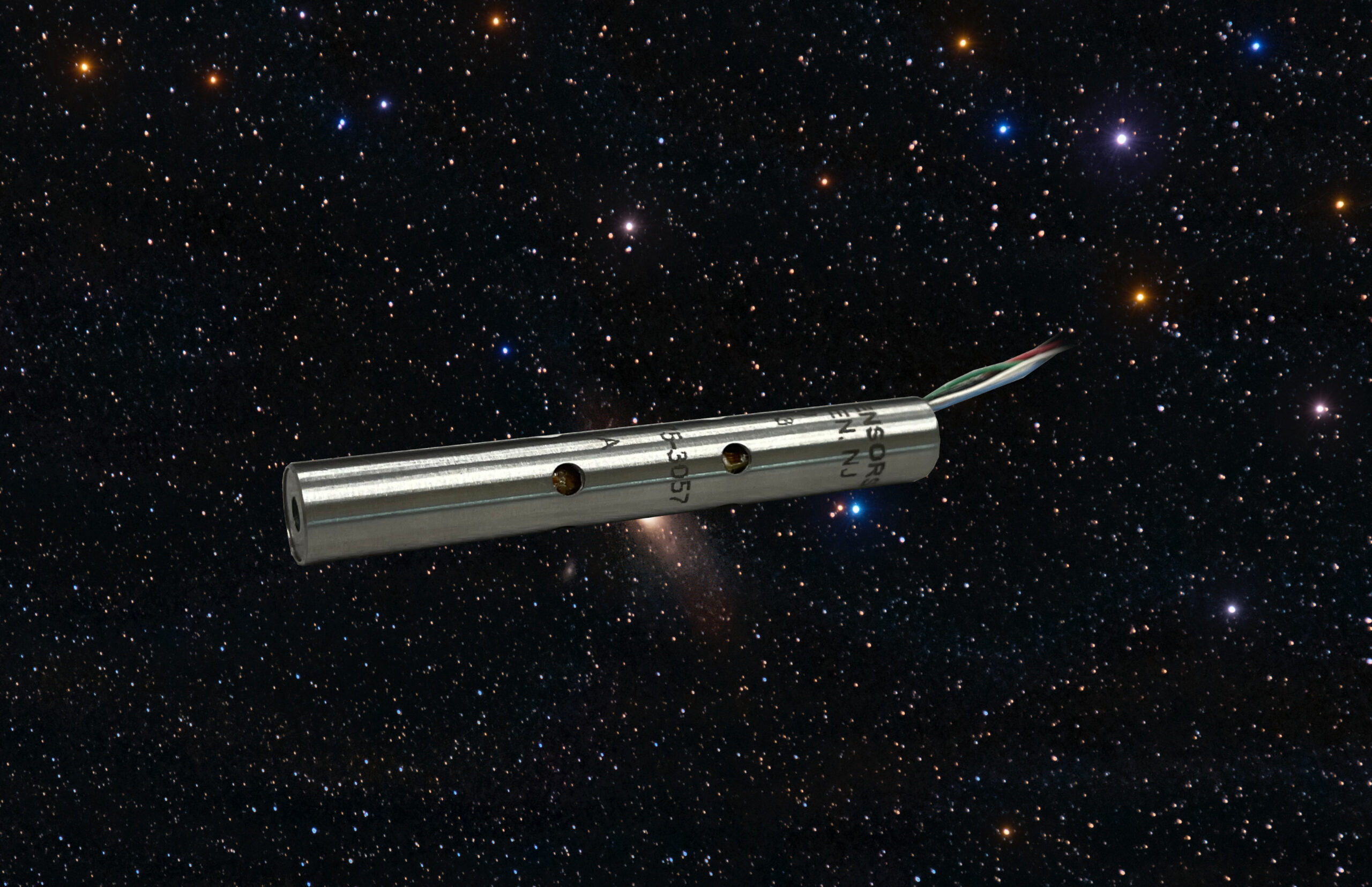
To address aerospace application requirements, NewTek displacement sensors can be customized with rugged and lightweight designs, low-outgassing materials and other application-specific features. This allows the sensors to be configured for aerospace specifications while providing position measurement over long operating periods.
LVDT space applications
In space vehicles, NewTek LVDTs are used to monitor the position and movement of components such as thrust vector control systems, engine actuators, control surfaces, environmental control system valves, landing gear mechanisms and elevated-temperature test stands. The sensors are designed to operate under vibration, shock, temperature extremes and long duty cycles in launch vehicles, satellites and spacecraft.
NewTek linear displacement sensors are also used in ground-based testing and qualification facilities. Engineers use them to measure displacement, deflection, vibration and structural movement during component testing, engine development, environmental simulation and materials evaluation. Their accuracy and repeatability support design validation and pre-deployment system testing.
LVDT configurations for space conditions
Space applications can expose sensors to demanding operating conditions. NewTek says its LVDTs can be engineered for cryogenic operation in vacuum conditions or near propellants such as liquid hydrogen and liquid oxygen. They can also be designed to withstand launch-related shock and vibration while maintaining position feedback.
Other design options include low-mass cores to reduce payload weight, low-outgassing construction to help limit contamination of spacecraft components and radiation-resistant construction for harsh environments. In aerospace applications, these features can support safety and long-term operation where failure risk must be reduced.
With customizable housings, stroke length, materials and performance characteristics, NewTek says it can configure an LVDT for specific aerospace requirements. The company says sensors can also be designed for extreme environments, including temperatures up to 1000°F, for use in spaceflight hardware, propulsion systems and ground-based testing.
For more information, visit newteksensors.com.


Leave a Reply
You must be logged in to post a comment.