Here, we outline how some linear components — including guides, cylinders, and even electric actuators — go strong for presses.
Lisa Eitel · Executive editor
Linear motion abounds in the machine-tool industry. But unlike machines using linear motion to transport workpieces (and for material handling generally) equipment such as presses use linear motion to apply force to compress, insert, and form assembly elements. Dominant here are heavy-duty linear guideways and hydraulic cylinders or (less common but on the rise) servodriven ballscrew or roller screw axes complemented by linear encoders and safety devices.
Related: Fluid Power World article library on presses
Pressing so essential to machine tool, woodworking, and assembly operations needs controlled application of force, position, and timing. Most press machines generate controlled linear force through a vertically oriented ram or slide. The latter are used to compress, assemble, form, insert, bend, straighten, or join metal, wood, rubber, or composite materials or subassemblies.
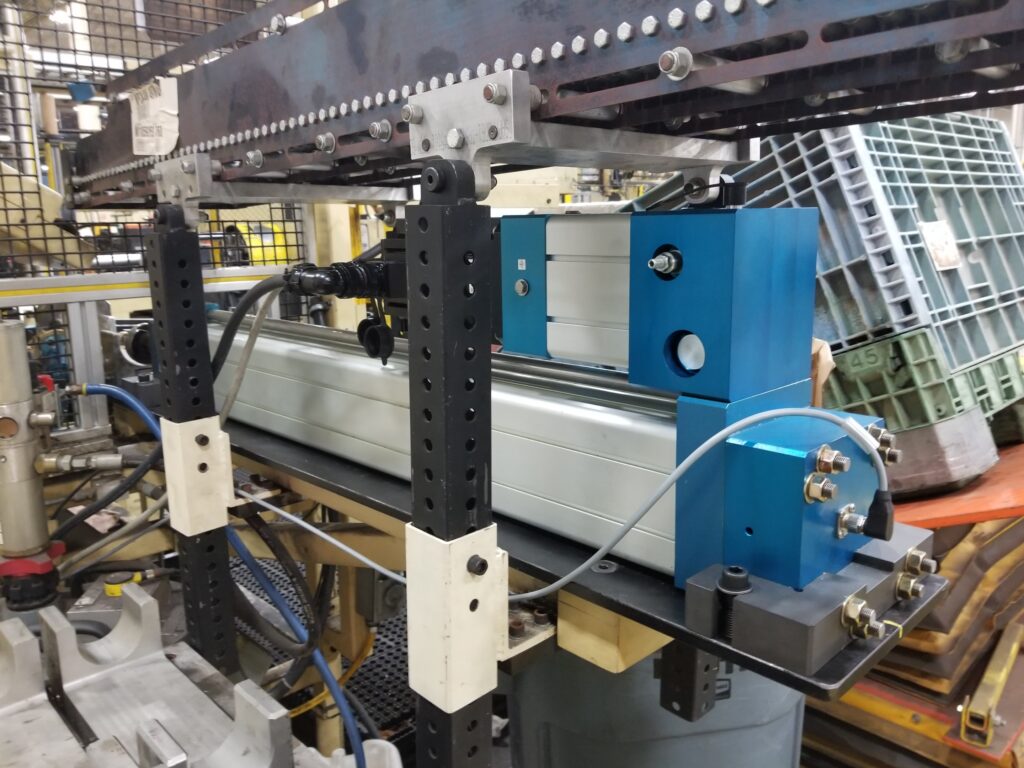
Any press variations involving assembly, insertion, or clamping emphasize high-resolution sensing and control of bottoming (seating) and consistent cycle-to-cycle repeatability. Operations are often slow and controlled. Data collection and process verification logic is common to automate confirmation of product output quality.
In contrast, punching, piercing, and shearing (and all the high force and impact loading they involve) require press equipment with especially rigid and rugged high-force output — often while maintaining high-speed production cycles as well. To protect tooling and ensure quality parts output, feedback is common to model and confirm material-breakthrough behavior.
Lastly, forming, bending, and stamping operations need stable force throughout the press stroke — so actuators in presses for these tasks must output high speed and force control. Uniform pressure distribution protects tooling and ensures dimensional accuracy of output parts.
In fact, stamping often proves the most challenging pressing application, because it can involve both workpiece-material variations and shock loading. Where the application is the shaping of large sheet metal sections between matched dies inside a press, motion is cyclical yet moderate. Stamping of small parts on the other hand can involve high-speed deformation and concurrent cutting of a material into shapes predefined by tool geometry.
Equipment designed for this kind of stamping contrast with press axes on molding and extrusion machinery needing stable clamping forces with pressure that’s maintained over prolonged heating and material-flow processes inside the mold halves. Smooth mold closing and reliable tooling alignment are other requirements.
When electromechanical pressing and stamping makes sense
Hydraulic cylinders absolutely dominate in press equipment — especially those needing the highest forces. But while hydraulic systems reign supreme, fluid leaks, energy consumption, compromised precision, and downtime can be real issues — especially as pumps, hoses, seals, and filtration components need regular servicing. What’s more, design engineers tend to overspecify presses’ hydraulic actuators for significantly higher force capacity than needed. This can unnecessarily increase equipment cost, footprint, and energy consumption.
Air-over-oil hydropneumatics can in some case meet the force and accuracy requirements of presses but tend to have low efficiency.
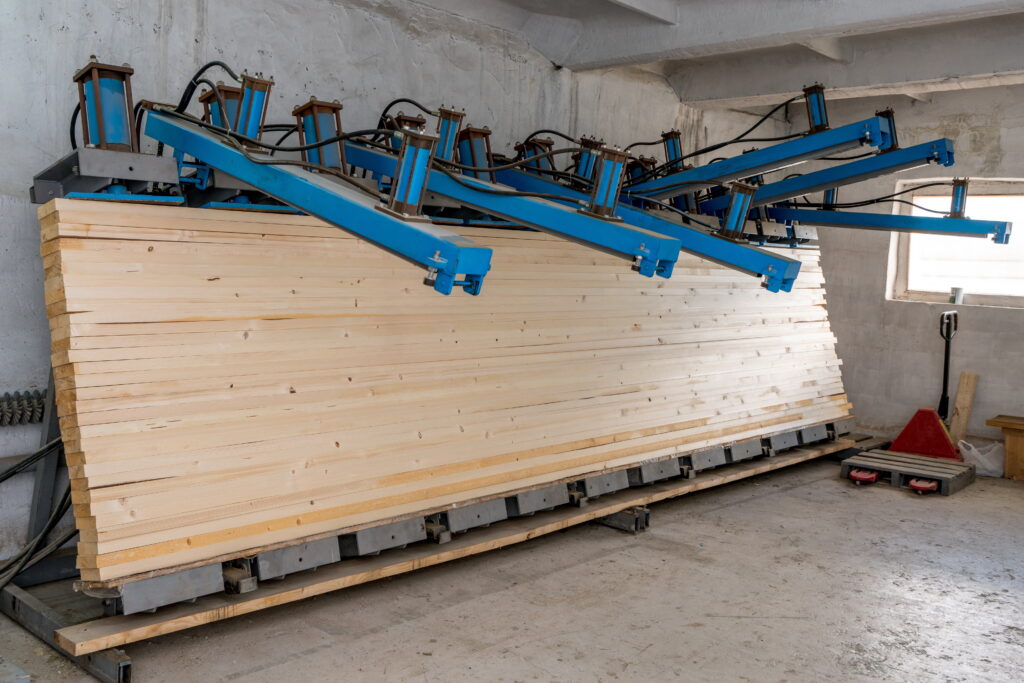
After fluid power, next-most capable in terms of absolute force are electric motors paired with roller screws — specifically, planetary roller screws. Case in point: Some assembly presses use servodriven roller-screw actuators to press bearing hubs into their assemblies with precisely controlled insertion depth and force.
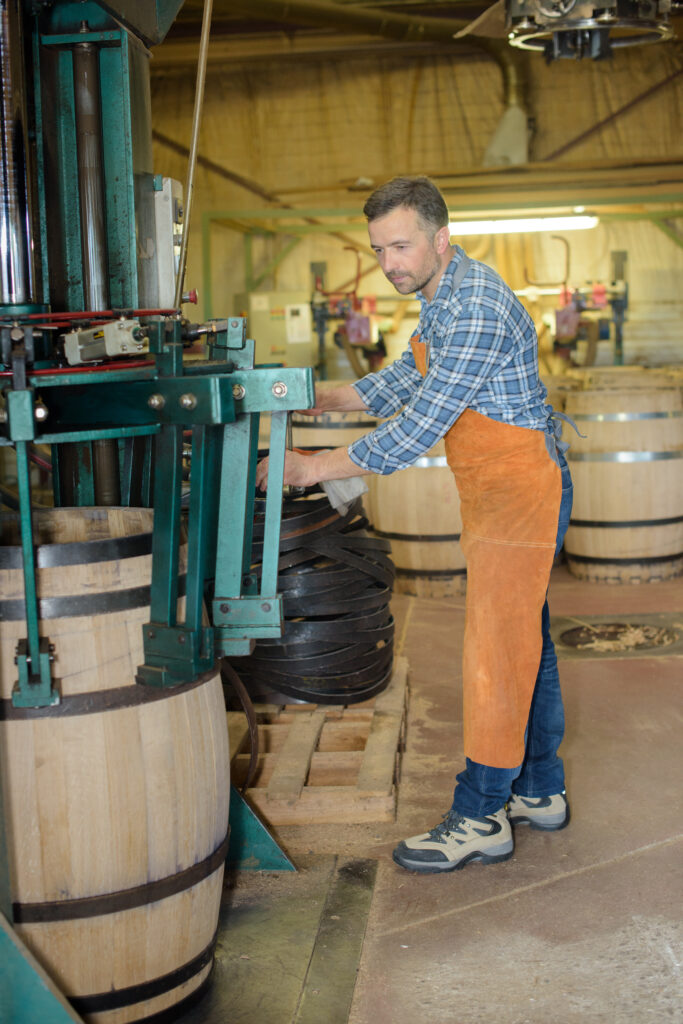
So, how common are roller screws in these and other presses — and why are roller screws seeing increased adoption?
“Generally, market awareness of screw technologies is growing,” said John Fenske of Tolomatic. “Designers these days are more aware of the advantages and disadvantages of each technology in a given application. Roller screws, in particular, are becoming more common in pressing and stamping due to the distinct advantages over other screw technologies in those applications.”
Planetary roller screws are more common in these applications than other roller screws because of their advantageous geometry. More specifically, the geometry “provides larger contact area for distribution of the load … and the manufacturing process for a precision ground planetary roller screw allows for deeper and more robust hardening of the screw. This results in a DLR or life that can be twice as long as other roller screw technologies,” said Fenske.

Servomotor-ballscrew pairings are generally only suitable in press applications needing precision control over axes involving relatively modest to moderate press forces. That said, some (for example, the Promess electromechanical assembly press or EMAP) come in large sizes to deliver to 1,000 N albeit at slower speeds than smaller units.
Indeed, screw-based electromechanical actuation delivers high precision, but without careful engineering, presses’ shock and impact loads can preclude their use … or accelerate screw wear and accuracy degradation.
“For press and stamp equipment, some manufacturers offer both ballscrews and planetary roller screws in their electric linear actuators. The [most suitable] choice typically depends on requirements for precision, duty cycle, life, and the amount of shock loading,” said Fenske of Tolomatic.
Indeed, viability of electromechanical actuation can depend on how much the machine tool is force-dominant (as in forming) or position-dominant (as in precision assembly).
“Generally stamping involves high speeds and impact energy that reflects back into the drive train of the actuator. In contrast, pressing applications tend to be lower speed but need more precise position and force control. Roller screws are a practical default in both applications due to the precision, high force capacity, resistance to shock loads and long life,” added Fenske.
Other linear-motion options for press axes
Rack-and-pinion drives are also employed on presses, though typically only to complement other liner-motion technologies — for example, to extend the stroke of a press axis, as on the Italian-made Pressix PPMi straightening press.
Any of these actuation options must be accompanied by some kind of linear component for loading bearing and guidance. The vast array of presses and the subset of stamping equipment integrate linear guides in the form of heavy-duty T-shaped boxways with gibs, round rail paired with bushings (usually integrated in foursomes around the axis), or recirculating-roller (ball or cylinder) profile-rail linear guides.
In many cases, these press-actuation options must also be accompanied by force sensors and load cells. On linear axes actuated by hydraulics, feedback is often supplemented by that from magnetostrictive transducers as well. On those pairing motors with screws or rack-pinion assemblies, feedback is often provided with motor current or torque feedback along with rotary encoders on the motor — or linear encoders for more direct measurement of output.
Tracing their roots to mechanical cranks and eccentric levers, today’s automated presses are dominated by hydraulics. That said, electromechanical actuators have been used for decades with a recent uptick in adoption.
One last option for press actuation is hybrid electric-hydraulic actuation. Components of this type directly integrate a fluid cylinder with a servomotor that drives a pump. The latter in turn generates hydraulic pressure within the sealed actuator assembly so there’s no need for a centralized hydraulic power unit, external hoses, or reservoirs.
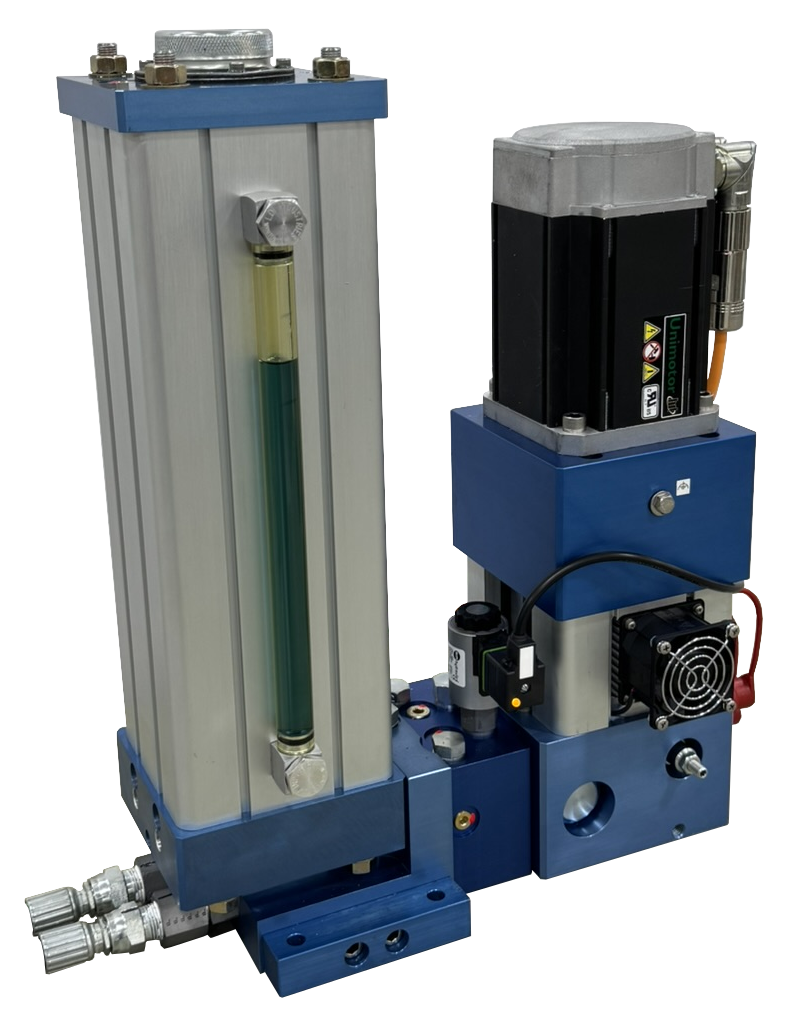
Output from these hybrid actuators is 100 to 150,000 lb that’s precisely controlled to deliver specific positions, forces, speeds, and dwell times set by servolevel programming. Power-on-demand operation makes for energy consumption that’s lower than that of traditional hydraulic systems. Plus, a sealed actuator body minimizes maintenance requirements and prevents leaks.
Thanks to their hydraulic force transmission, hybrid actuators can also tolerate the shock loads commonly encountered in pressing applications.
Check out Part 2 of 3: Heavy-duty electric actuation — to replace hydraulics.

Leave a Reply
You must be logged in to post a comment.