In the last installment of this series, we outlined how linear components (including guides, cylinders, and electric actuators) perform well for presses. Here, we describe the requirements for using electromechanical actuation on heavy-duty machine tool axes.
Lisa Eitel · Executive editor
Consider how some industrial forming machines use screw-type electric actuators rather than hydraulics to apply controlled force over a set distance. These actuators usually combine a rotary electric motor (such as an ac servomotor) and a ballscrew or planetary roller screw to precisely advance a ram, platen, or slide. Complementing the motion system are thrust bearings for end support and axial load handling, linear guides flanking the screw, and force and position sensors for feedback.
Related: Fluid Power World article library on presses
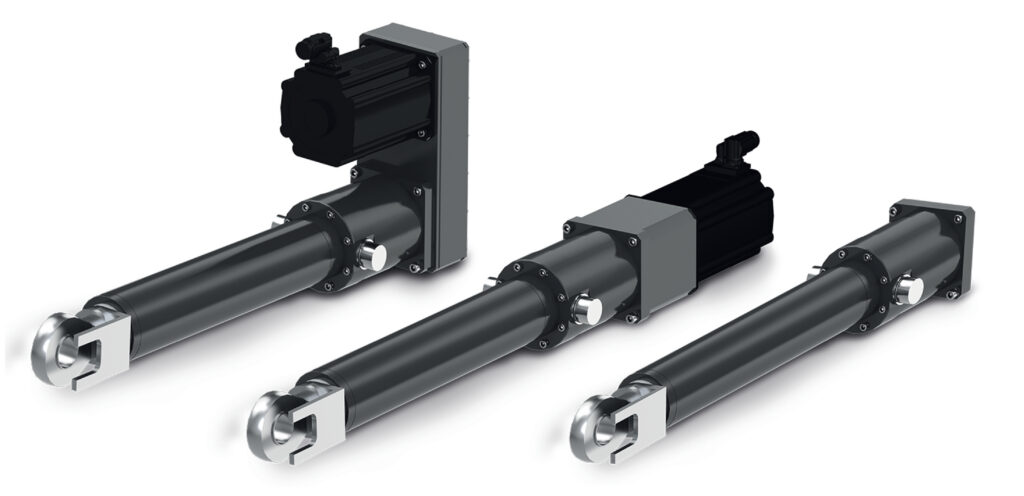
Ballscrews have lower load capacity than fluid-power solutions yet are extremely precise. Planetary roller screws, which use threaded rollers rather than balls for more contact (and therefore transmit more power) can output axial forces approaching those of some hydraulic cylinders … though the peak force density of all but the largest roller screws is still lower than that of hydraulics.
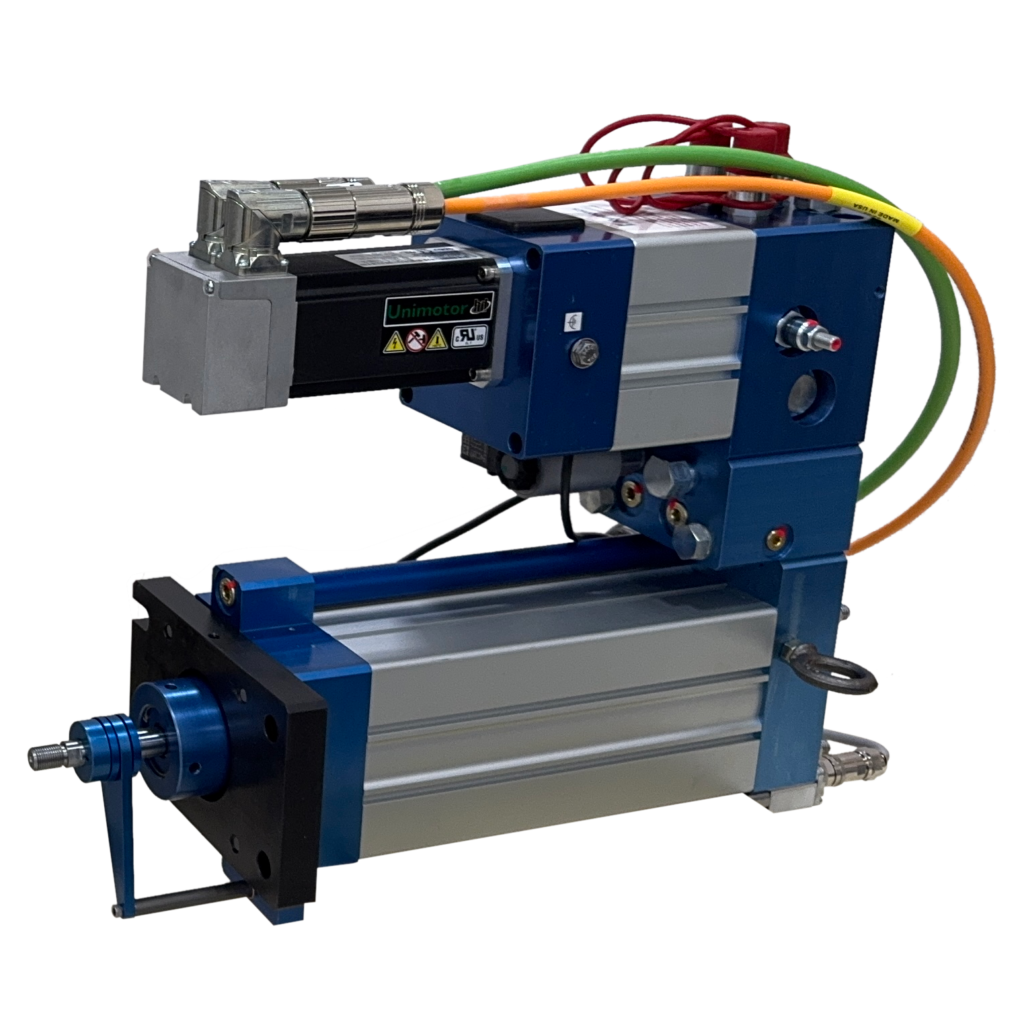
That said, many applications’ requirements are within the ranges of stock electric cylinders based on planetary roller screws. A representative actuator with a 75-mm cylinder screw size might deliver peak forces to 500 kN — previously possible only with hydraulics. What’s more, the precision recirculating roller screws and short screw leads (1 mm) deliver this force with high positioning accuracy for positioning adjustments controllable down to micrometers.

Both screw-based types of actuation offer the efficiency and programmability of motor-based systems as well as relatively easy integration into networks for advanced digital configuration and monitoring. These benefits make electromechanical linear actuation worthwhile in a wide variety of machine-tool and other applications … justifying the extra engineering and maintenance required to establish and sustain their reliability and performance in heavy-duty applications.
Thermal effects and the importance of lubrication
In heavy-duty machines, a major threat to ballscrew and planetary roller-screw performance is heat. High RMS torque from frequent speed changes can make the nut and support bearings especially hot even if the axis is operating slowly. In fact, all the contacting elements inside the nut often means it runs hotter than the screw and frame, so there’s uneven expansion and load distribution. Unfortunately, if the screw overheats (through thermal conduction via contact with internal nut elements) it can lengthen and clearances increase … and machine performance falls. So, specifying screw-based actuation for heavy-duty axes requires careful quantification of how hot the screw will get during normal operation. Then if needed to address axial growth, a rotary bearing at one screw end can be left free or complemented with an expansion compensator or other sensor-based solution.
Absolutely central to keeping operating temperatures in range is the oil or grease within the assembly. This is why regular relubrication is critical — especially for roller screws.

“In high-duty-cycle applications, thermal buildup can lower lubricant effectiveness, reduce fatigue life, and cause thermal expansion that can degrade backlash and precision,” said engineer John Fenske of Tolomatic. “To mitigate these effects, it’s always wise to have scheduled maintenance with relubrication” — especially when using screw-based actuation in heavy-duty machinery, noted Fenske.
“Other options are high-temperature greases or selecting an actuator that is oil-cooled.”
The maximum allowable nut temperature dictates which materials, coatings, cages, seals, and to some extent preloading are most suitable. In oil-cooled actuators, the screw is usually in a sealed compartment filled with oil that acts as both lubricant and coolant. Viscosity is carefully selected (along with additives) to prevent film breakdown or (the opposite issue) thickness that exhibits churning.
“The stroke length of the actuator should also be considered,” added Fenske. “In applications with short strokes needing a single rotation of the screw or less, lubricant distribution can be affected, causing thermal buildup and premature failure. A well-planned relubrication schedule is critical in these cases,” concluded Fenske.
Of course, machine-tool settings often include shavings, abrasive particulates, and detrimental fluids that (unless the ballscrew or roller screw is fully sealed and ruggedized against ingress) could contaminate the lubricant within.

Shock loading on heavy-duty axes
One key advantage of hydraulic cylinders is how their fluid-based physical linkage to axes’ end effecting protects the rest of a machine assembly against shock loading. Such shock is common in machine tools that output high forces that are sudden (or suddenly reversed) or subjects to repeated impacts. On screw-based assemblies, such loading can induce plastic deformation (including Brinelling) on the linear drive as well as guide assemblies, even if peak load stays within rated limits.

“Shock loads are a concern due to the heavy tooling and the general inertia that is typical in these systems,” said Fenske. “A roller screw will mitigate shock loads due to its structural stiffness and larger contact area, but if the risk of shock loading is high, designers should consider selecting higher-capacity roller screws and possibly shorter screws to reduce backdriving tendencies during shock events,” he said.
Any applications involving especially challenging loading should be outfitted with mechanical drives that won’t exhibit torsional screw windup, nut-roller skew, or cage instability. Though service life for screw drives depends on duty cycle and the motion profiles of the axis’ functions, machine tools that could damage assemblies with sudden loading should be specified with a generous static safety factor.
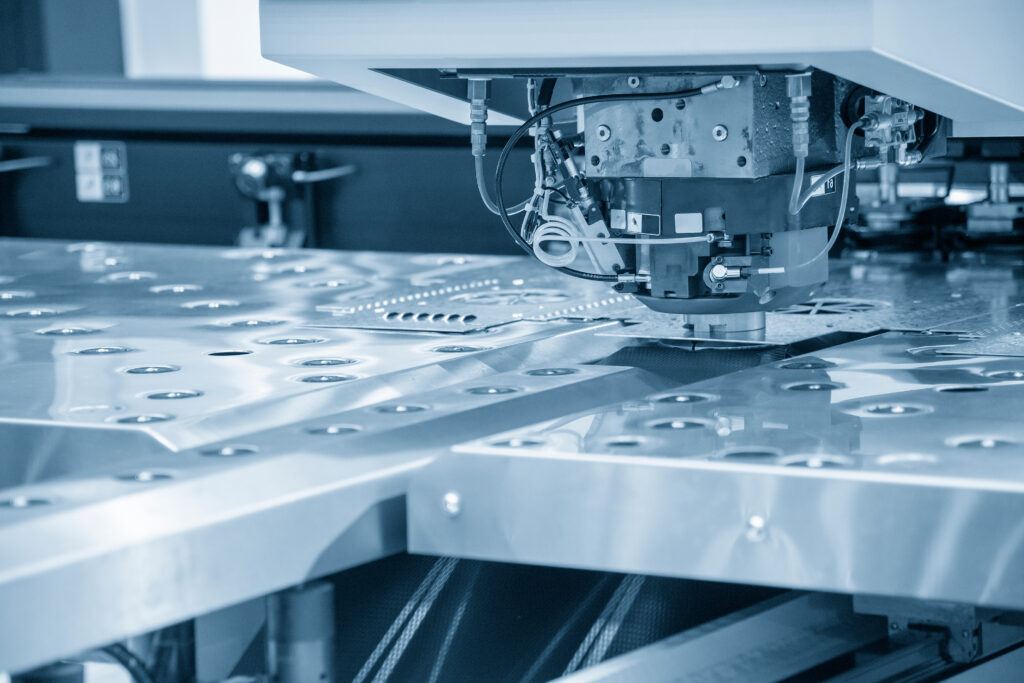
The importance of bearings (both radial and linear)
Any screw-based electric actuation of heavy-duty machine-tool axes requires radial bearings (at the motor and screw ends) as well as linear bearings engineered, specified, and installed to prevent misalignment and side loading — especially on axes involved in pressing or stamping. In addition, the machine frames to which bearing and guide elements are assembled must be rigid … or else edge loading and localized Hertz stresses can occur. That’s because ballscrews and roller screws don’t tolerate radial and moment loads or lacking parallelism.
Radial and linear bearings together must also accommodate the excitation of critical speeds as well as torsional and axial resonance modes — and minimize any skidding, fretting, and noise (and worse yet, plastic deformation) that can accompany vibration. Stability in the face of rapid accelerations and reversals for a given characteristic speed DN is especially important on machine-tool axes. Read more about screw critical speed vs. characteristic speed DN at linearmotiontips.com.
Whether hydraulic cylinder or servomotor-screw driven, the most demanding machine tool axes — the ramming axes of a sheetmetal stamping presses, for example — often use gibbed boxways, round-rail linear bushings or splines, or rugged hydrostatic linear guides designed to maintain parallelism even under high dynamic loads.

Hydrostatic linear guides have carriages featuring an internal circuit of pressurized oil that’s regulated by an external system. The carriage rides the linear guideways upon its circuit’s hydrostatic pockets of oil.
Any linear load bearing with profile-rail guides (containing relatively delicate rolling bearing elements) must be very carefully engineered.
No matter the type used, the linear guides on these demanding axes need to maintain parallelism and axiality with the mechanical drive. When paired with a screw-based drive, they must also keep the radial load on the drive nut within allowable values — or integrate with complementary brackets, mounts, and supports to prevent drive-assembly reactions to nonideal loading.
Feedback with hybrid actuation
Digital-transformation (DX) efforts are increasing the need for connected manufacturing. Press equipment now requires actuation with integrated force and position feedback, realtime monitoring, and cycle-level data collection. This is critical where traceable process data is needed for quality checks and predictive maintenance.
What’s more, manufacturing is moving to more product variety and faster changeovers. Presses must adapt quickly to changing process parameters.

Electric actuation is easier than hydraulic actuation to integrate into software systems for DX and IIoT functions.
For example, programmable hybrid electric-hydraulic actuation fits the bill for such flexible production lines with modifiable force, position, speed, and dwell profiles. Output from some of these hybrid actuators is 100 to 150,000 lb precisely controlled to deliver specific positions, forces, speeds, and dwell times set by servolevel programming. Such actuators can even include force and position sensors for realtime cycle traceability, process validation, and automated pass-fail quality checks. Such connectivity also lets operations synchronize multiple hybrid electric-hydraulic actuators on especially high-force applications or machines that need to distribute force across large tooling structures.
Check out Part 3 of 3: Heavy-duty electric actuation — on large-scale gantries.

Leave a Reply
You must be logged in to post a comment.