

While ironless linear motors have been used in semiconductor and electronic applications for more than a decade, they are still viewed by many designers and OEMs as “niche” products. But the perception of linear motors as a costly solution for unique applications is slowly changing, as more industries are adopting them as replacements for ball screws […]
linear motion
Make no mistakes about ball screw lead error
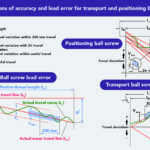
Updated July 2016 || Accuracy is an important criteria in ball screw selection. But with two production methods and four different standards governing ball screw accuracy, making the best selection for your application can be a challenge. Understanding these standards and terminology, as well as the differences between the two manufacturing methods, will help you choose a ball screw […]
We’ve Got You Covered: A Quick Guide to Platings and Coatings
Machine builders and end users have many factors to consider when choosing linear motion components and systems – travel length, speed, acceleration, positioning accuracy and repeatability, just to name a few. But sometimes the most challenging requirement isn’t a traditional application spec. It’s the environment that the system will be working in. Many industries have processes […]
Long Travel vs High Speed: Part 2
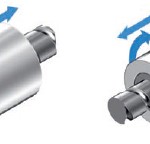
In a recent post, we discussed using ball screw supports as a way to overcome the tradeoff between long travel length and high speed in ball screw applications. Responding to that post, several readers pointed out another solution to overcome the length-speed limitations of ball screws – rotating the ball nut rather than the screw itself. Benefits In […]
How to calculate linear bearing life

When selecting linear guides, have you ever seen a disclaimer in the catalog or on the manufacturer’s website regarding dynamic load capacities? It typically reads something like this: Dynamic load capacities are based on 100,000 m of travel. When comparing to products for which load capacities are based on 50,000 m of travel, multiply the 100,000 m […]
Three Ways to Save Space with Linear Actuators

Linear actuators are available in configurations that address virtually any application – rail, shaft, or cam roller guideway; screw, belt, or linear motor drive; with or without protective covers; and a wide variety of features to meet unique environmental or technical requirements. All these options make it relatively easy to find the right actuator for […]
ETEL Offers an Ironless Line of Linear Motors
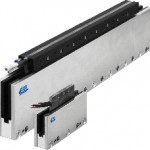
ETEL presents its line of ironless high-speed linear motors, the ILF and the ILM series. Built for use in the semiconductor and electronics industry, this line of ironless linear motors adds to the wide range of motors and solutions that ETEL provides to those industries and beyond. Of particular importance to the semiconductor and electronics industries, […]
How Seals Extend the Life of Linear Systems

When selecting a linear system – ball screw, linear guide, or actuator – most of the focus is on application data such as load, speed, travel, and duty cycle. But there’s another factor that should be considered, especially for technically demanding applications or harsh environments. That factor is sealing. How are the bearings protected against […]
How to Achieve Long Travel and High Speed with Ball Screws
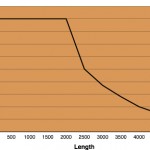
If you need a linear motion system that can travel at high speed over long lengths, what solutions come to mind first? Belt drives? Rack and pinion systems? Linear motors? If the application requires high thrust force, belt drives won’t suffice, and if high positioning accuracy is important, rack and pinion systems are out. Linear […]
Motorized Linear Rail System features space saving fold-over design

Linear motion products manufacturer Haydon Kerk Motion Solutions (www.haydonkerk.com) has announced that its Kerk® RGS/RGW linear rail platform now comes with a 180° folded-over motorized design. The design permits for a small footprint linear actuator system suitable for precision motion applications in space-limited work environments. The folded-over linear rail offers all the necessary components for […]