• Skip to primary navigation
  • Skip to main content
  • Skip to primary sidebar
  • Skip to footer
  • Advertise
  • Subscribe

Linear Motion Tips

Covering Linear Motion Systems, Components and Linear Motion Resources

  • News
    • Editor’s blog
    • Industry news
    • Motion Casebook
  • Applications
  • Slides + guides
    • Ball + roller guides
    • Track roller (cam + wheel) guides
    • Crossed-roller slides
    • Linear bearings
    • Plastic + composite guides
  • Drives
    • Ball + lead + roller screws
    • Belt + chain drives for linear
    • Rack + pinion sets
  • Actuators
    • Ball + leadscrew driven
    • Belt + chain driven
    • Linear motors
    • Mini + piezo + voice coil
    • Rack + pinion driven
    • Rigid-chain actuators
  • Encoders + sensors (linear) + I/O
  • Stages + gantries
  • Resources
    • Suppliers
    • Video

Gallery: Rod style actuator variations and uses

★ By Danielle Collins 1 Comment

← PREVIOUS PAGE
One of the benefits of a rod style actuator is that its housing can be completely enclosed, with a seal on the thrust rod to prevent contamination or liquids from entering through the rod opening. This design makes it possible to achieve high IP ratings for applications with exposure to water and liquids, such as washdown processes in the food and beverage industry.
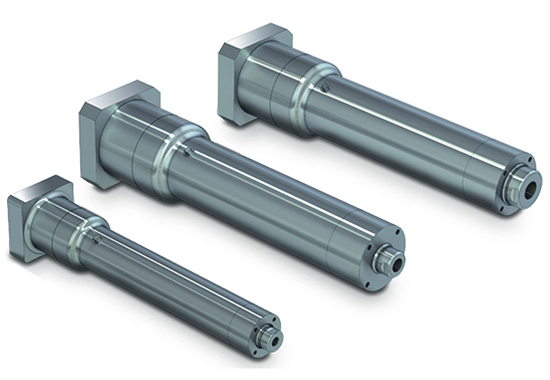
rod style actuator
One of the unique benefits of rod style actuators is that they can be constructed with features that make them suitable for challenging environmental conditions and requirements. For example, the ERD hygienic actuators from Tolomatic are made from stainless steel and are IP69K rated, suitable for steam and high-pressure washdown.

And with the recirculating bearings (for ball and roller screw designs) are completely enclosed, the housing and thrust rod can be specially coated or constructed of stainless steel to make the actuator suitable for hygienic, food-grade, or corrosive applications — a feature that is difficult to achieve with slider type linear actuators due to their open construction.

rod style actuator
Rod style actuators position bottles for filling.
Image credit: Curtiss-Wright Exlar
NEXT PAGE →

You might also like

Pages: Page 1 Page 2 Page 3 Page 4 Page 5

Filed Under: Ball + leadscrew driven, FAQs + basics, Featured, Linear actuators (all)

Reader Interactions

Leave a Reply

You must be logged in to post a comment.

Primary Sidebar

LEARNING CENTER

Design World Learning Center
“lmt
EXPAND YOUR KNOWLEDGE AND STAY CONNECTED
Get the latest info on technologies, tools and strategies for Design Engineering Professionals.
“linear

RSS Motion Control Tips

  • igus one-piece energy chain targets compact cable routing
  • EtherCAT meets CRA Level 2, higher-security options in work
  • Elmo debuts new Titanium line and Platinum servo drives at SPS 2025
  • AutomationDirect adds new soft starters and smart motor starters
  • Vert-X 26-series angle sensors are robust and accurate

RSS Featured White Papers

  • Robotic Automation is Indispensable for the Logistics Industry’s Continued Growth and Success
  • Reliable Linear Motion For Packaging Machines
  • Technical Brief – “Understanding the Extensive Benefits of Total Linear Positioning Systems.”

Footer

Linear Motion Tips

Design World Network

Design World Online
The Robot Report
Coupling Tips
Motion Control Tips
Bearing Tips
Fastener Engineering
Wire and Cable Tips

Linear Motion Tips

Subscribe to our newsletter
Advertise with us
Contact us
About us

Copyright © 2026 · WTWH Media LLC and its licensors. All rights reserved.
The material on this site may not be reproduced, distributed, transmitted, cached or otherwise used, except with the prior written permission of WTWH Media.

Privacy Policy